


Exhaust System Catalog
Hartzell Aviation (QAA) leverages our extensive experience servicing single, twin, turbocharged, radial, and turbine aircraft exhaust systems. With our specialized knowledge and superior customer service, we’ll swiftly get you back in the air when you need it most!
Explore our comprehensive exhaust catalog below, and if you don’t find what you’re looking for, feel free to give us a call for customized solutions.
-
- Engine Specific Exhaust
- Teledyne Continental Motors Exhaust Systems
Coming Soon
- Textron Lycoming Engines Exhaust Systems
- Lycoming TIO-540-AB1AD
- Lycoming TIO-540-AE2A
- Lycoming TIO-540-AF1A
- Lycoming TIO-540-AF1B
- Lycoming TIO-540-AG1A
- Lycoming TIO-540-AH1A
- Lycoming TIO-540-AJ1A
- Lycoming TIO-540-AK1A
- Lycoming TIO-540-C1A
- Lycoming L/TIO-540-J2B
- Lycoming L/TIO-540-J2BD
- Lycoming L/TIO-540-F2BD
- Lycoming L/TIO-540-N2BD
- Lycoming TIO-540-S1AD
- Lycoming L/TIO-540-R2SD
- Lycoming L/TIO-540-V2AD
- Lycoming L/TIO-540-W2A
- Teledyne Continental Motors Exhaust Systems
- Engine Specific Exhaust
-
- Cessna Exhaust and Parts
- Cessna Single Engine Series
- Cessna Single Engine 100 Series
- Cessna 120 Series Parts
- Cessna 140 Series Parts
- Cessna 150 Series Parts
- Cessna 152 Series Parts
- Cessna 170 Series Parts
- Cessna 172 Series Parts
- Cessna 172 Avcon O360 Conv.(STC
SA807CE) - Cessna 172A/172B (SN 28000-47746)
- Cessna 172 Skyhawk Models A-H(SN
47747-56512) - Riems 172 Skyhawk Models A-H(SN
0001-0804) - Cessna 172 Skyhawk Models I-Q(SN
56513-76673) - Cessna 172 Skyhawk Models R (SN
80001 and On) - Cessna 172 Skyhawk Models S (SN
S8001 and On) - Cessna 172RG Cutlass(SN 0001-1178)
- Cessna R172K Hawk XP(SN 0001-3454)
- Riems R172K Hawk XP(SN 0001-0675)
- Cessna 172 Avcon/Doyne Conversions
- Cessna 172 Avcon O360 Conv.(STC
- Cessna 175 Series Parts
- Cessna 177 Series Parts
- Cessna L-19/O-1 Series Parts
- Cessna 180 Series Parts
- Cessna 182 Series Parts
- Cessna 182 Skylane (SN
33000-53598) - Cessna 182 Skylane (SN
53599-68055) - Cessna T182 Turbo Skylane(SN
67716-68541) - Cessna 182RG Skylane RG (SN
0001-2032) - Cessna TR182 Turbo Skylane RG(SN
0001-2032) - Cessna 182S Skylane NG(SN
80001-80286) - Cessna 182T Skylane NG(SN 80287 and
On) - Cessna T182T Turbo Skylane
NG(TIO540-AK1A)
- Cessna 182 Skylane (SN
- Cessna 182 Sealane(Float Kits)
- Cessna 185 Series Parts
- Cessna 188 Series Parts
- Cessna 190 Series Parts
- Cessna Single Engine 200 Series
- Cessna Caravan Series
- Cessna Corvallis Series
- Cessna Single Engine 100 Series
- Cessna Multi Engine Series
- Cessna 303 Crusader (SN 0001- 0315)
- Cessna 310/320 Series
- Cessna 310 B-H (Overwing Style Exhaust)
- Cessna 310 I-Q (Underwing Style
Exhaust) - Cessna 310R(IO520-M/Underwing With Mufflers)
- Cessna 310P (TSIO 520-B)
- Cessna 310Q (TSIO 520-B)
- Cessna 310R (TSIO 520-B)
- Cessna 320C SkyKnight (TSIO 470)
- Cessna 320E Executive SkyKnight(TSIO 520-B)
- Cessna 320F SkyKnight(TSIO 520-B)
- Cessna 335 (TSIO 520-EB)
- Cessna 336/337 Series
- Cessna 336 – Both Engines
- Cessna 337(Cont. IO360 Engine)
- Cessna T337- Front Engine (SN 0569-1815)
- Cessna T337- Rear Engine (SN 0569-1815)
- Cessna T337P- Front Engine (SN 0001-0225)
- Cessna T337P- Rear Engine (SN 0001-0225)
- Cessna T337- Front Engine (SN 1816-1951)
- Cessna T337- Rear Engine (SN 1816-1951)
- Cessna T337P- Front Engine (SN 0226-0356)
- Cessna T337P- Rear Engine (SN 0226-0356)
- Cessna 340 Series
- Cessna 401/402 Series
- Cessna 404 Titan II
- Cessna 411 (GTSIO-520-C)
- Cessna 414 Series
- Cessna 421/425/441 Series
- Cessna Current Production
- Cessna 172S Skyhawk NG(SN S8001 and On)
- Cessna 182T Skylane NG(SN 80287 and On)
- Cessna T182T Turbo Skylane NG(TIO540-AK1A)
- Cessna 206H Stationair NG
- Cessna T206H Turbo Stationair(TIO540-AJ1A)
- Cessna 350 Corvalis
- Cessna 400 Corvalis TT(TCM TSIO-550-C)
- Cessna 208/675 Caravan/Grand Caravan
- Cessna Supervan 900
- Cessna Single Engine Series
- Cessna Exhaust and Parts
-
- Piper Exhaust and Parts
- Piper Singles
- Piper Classics(J3 Thru PA22)
- J3 Cub With Cont. A-65 Engine
- PA11 With Cont. A-65 Engine
- PA11 With Cont. C-85 and C-90 Conversion
- PA18 With Cont. C-85 and C-90 Conversion
- PA12 Super Cruiser With Lycoming O-235
- PA14 Family Cruiser With Lycoming O-235
- PA15 Vagabond With Lycoming O-145
- PA16 Clipper With Lycoming O-235
- PA17 Vagabond With Cont. A-65-8
- PA18 SuperCub
- PA20 Pacer With Lycoming 0290
- PA22 Colt With Lycoming 0235
- PA22 Tri-Pacer With Lycoming 0320
- PA-24 Commanche
- PA-25/36 Piper Pawnee
- PA-28 Piper Cherokee
- PA-28-140 Cherokee Cruiser (SN 28-20001 —
28-26946) - PA-28-140 Cherokee Cruiser (SN 28-7125001 —
28-7725290) - PA-28-150 Cherokee 150 (SN 28-1 —
28-1760) - PA-28-150 Cherokee 150 (SN 28-1761 —
28-4377) - PA-28-160 Cherokee 160 (SN 28-1 —
28-1760) - PA-28-160 Cherokee 160 (SN 28-1761 —
28-4377) - PA-28-180 Cherokee 180 (SN 28-671 —
28-1760) - PA-28-180 Cherokee 180 (SN 28-1761 —
28-5859) - PA-28-180 Cherokee 180 (SN 28-7105001 —
28-7205318) - PA-28S-160 Cherokee Seaplane 160 (SN 28-1 —
28-1760) - PA-28S-180 Cherokee Seaplane 180 (SN 28-671
— 28-1760) - PA-28S-180 Cherokee Seaplane 180 (SN 28-1761 —
28-5859) - PA-28S-180 Cherokee Seaplane 180 (SN 28-7105001
— 28-7205318) - PA-28-235 Cherokee Pathfinder (SN 28-10001 —
28-11378) - PA-28-235 Cherokee Pathfinder (SN 28-7110001 —
28-7710089)
- PA-28-140 Cherokee Cruiser (SN 28-20001 —
- PA-28 Piper Archer
- PA-28 Piper Warrior
- PA-28 Piper Arrow
- PA-28R-180 Arrow (SN 28R-30002 — 28R-31270)
- PA-28R-180 Arrow (SN 28R-7130001 — 28R-7130013)
- PA-28R-180 Arrow II (SN 28R-35001 — 28R-35820)
- PA-28R-200 Arrow II (SN 28R-7135001 — 28R-7135229)
- PA-28R-201 Arrow III (SN 28R-7737002 — 28R-7837317)
- PA-28R-201 Arrow III (SN 2837001 — 2837061)
- PA-28R-201 Arrow III (SN 2844001 and ON)
- PA-28R-201 Arrow IV (SN 28R-7918001 — 28R-8218026)
- PA-28R-201T Turbo Arrow III (SN 28R-7703001 —
28R-7803373) - PA-28R-201T Turbo Arrow III (SN 2803001 — 2803012)
- PA-28RT-201T Turbo Arrow IV (SN 28R-7931001 —
28R-8631005) - PA-28RT-201T Turbo Arrow IV (SN 2831001 — 2831038)
- PA-28 Piper Dakota
- PA-32 Piper Cherokee Six
- PA-32-260 Cherokee Six 260 (SN 32-1 — 32-1297)
- PA-32-260 Cherokee Six 260 (SN 32-7100001 —
32-7800008) - PA-32-300 Cherokee Six 300 (32-40000 —
32-40974) - PA-32-300 Cherokee Six 300 (32-7140001 —
32-7940290) - PA-32S-300 Cherokee Six Seaplane (32-40000
— 32-40974) - PA-32S-300 Cherokee Six Seaplane
(32-7140001 — 32-7940290)
- PA-32 Piper Saratoga
- PA-32-301 Saratoga (32-8006002 — 32-8606023)
- PA-32-301 Saratoga (3206001 — 3206060)
- PA-32R-301 Saratoga SP (SN 32R-8013001 —
32R-8613006) - PA-32R-301 Saratoga SP (SN 3213001-3213041)
- PA-32R-301 Saratoga II HP (SN 3213042 — 3213103)
- PA-32R-301 Saratoga II HP (SN 3246001 and On)
- PA-32R-301T Turbo Saratoga SP (SN 32R-8029001 —
32R-8629008) - PA-32R-301T Turbo Saratoga SP (SN 3229001 —
3229003) - PA-32R-301T Saratoga II TC (SN 3257001 and On)
- PA-32 Piper Lance
- PA-32 6x Series
- PA-38 Tomahawk
- PA-46 Series Aircraft
- Piper Classics(J3 Thru PA22)
- Piper Twins
- PA-23 Apache-Aztec
- PA-30/39 Piper Twin-Commanche
- PA-31 Series Aircraft
- PA-31-300 Navajo (SN 31-2 — 31-900)
- PA-31-300 Navajo (SN 31-7300901 — 31-8312019)
- PA-31-310 Navajo (SN 31-2 — 31-900)
- PA-31-310 Navajo (SN 31-7300901 — 31-7400990)
- PA-31-325 Navajo C/R (SN 31-7512001 — 31-8312019)
- PA-31-350 Navajo Chieftain(SN 31-7305001 — 31-8452024)
- PA-31-350 T-1020(SN 31-8253001 — 31-8553002)
- PA-31P-425 Pressurized Navajo (SN 31P-1 — 31P-80)
- PA-31P-425 Pressurized Navajo (SN 31P-7300110 —
31P-7730012) - PA-31P-350 Mojave (SM 31P-8414001 — 31P-8414050)
- PA-34 Seneca
- PA-34-200 Seneca I (SN 34-7250001 — 34-7450220)
- PA-34-200T Seneca II (SN 34-7570001 — 34-8170092)
- PA-34-200T Seneca III (SN 34-8133001 — 34-8633031)
- PA-34-200T Seneca III (SN 3433001 — 3433172)
- PA-34-200T Seneca III (SN 3448001 — 3448037)
- PA-34-200T Seneca IV (SN 3448038 — 3448079)
- PA-34-200T Seneca IV (SN 3447001 — 3447029)
- PA-34-220T Seneca V (SN 3449001 and On)
- PA-42-720 Cheyenne III
- PA-44 Seminole
- PA-60 Aerostar
- Piper Singles
- Piper Exhaust and Parts
-
- Beech
- Beech Singles
- Beech 19 Musketeer
- Beech 23 Musketeer and Sundowner
- BeechCraft Musketeer 24 (SN MA001-MA340)
- BeechCraft Musketeer 24 (SN MA341-MC368)
- BeechCraft Musketeer 24R (SN MC002-MC795)
- Beech 33 Series Bonanza
- Beech 35 Series Bonanza
- BeechCraft 35 Models A-G (SN 0001-4865)
- BeechCraft H35 (SN D-4866 – D-5330)
- BeechCraft J35 (SN D-5331 – D-5725)
- BeechCraft K35 (SN D-5726 – D-6561)
- BeechCraft N35 (SN D-6562 – D-6841)
- BeechCraft P35 (SN D-6842 – D-7108)
- BeechCraft P35 (SN D-7109 – D-7309)
- BeechCraft S35/V35/A/B(SN D-7310 and On)
- BeechCraft 35 Turbo
- Beech 36 Series Bonanza
- BeechCraft 77 Skipper
- Beech Twins
- BeechCraft Twin Bonanza 50
- BeechCraft 55/58 Baron With 2″ Tailpipe
- BeechCraft 55/58 Baron With 2.5″ Tailpipe
- BeechCraft 55/58 Baron With Removable Tailpipe
- BeechCraft Baron 58P (TSIO-520L)
- BeechCraft Baron 58TC (TSIO-520L)
- BeechCraft Baron 56TC(TIO541-E1A4)
- BeechCraft Duke(TIO541-E1B4)
- BeechCraft Duke(TIO541-E1C4)
- BeechCraft Duchess 76
- BeechCraft 95(SN TD-001 – TD-452)
- BeechCraft 95(SN TD-453 and On)
- BeechCraft King Air 90/99/100(PT6 and
TPE-331) - BeechCraft King Air 200
- BeechCraft King Air 300/350
- BeechCraft 1900 Airliner
- Beechcraft 18 Super(C45 Expeditor)
- BeechCraft 18(C45 Expeditor)
- Beech Singles
- Beech
-
- American Aviation
- AA1 Yankee Clipper(SN AA1-0001 – 0419)
- AA1 Yankee
Clipper(SN AA1-0420 – 0459) - AA1A Trainer (SN
AA1A-0001 – 0470) - AA1B TR-2 (SN
AA1b-0001 and On) - AA1C T-Cat &
Lynx (All Serials) - AA5 Traveler (SN AA5-0001 – 0640)
- AA5 Traveler (SN AA5-0641 – 0834)
- AA5A Cheetah (SN AA5A-0001-0900)
- AA5B Tiger (All Serials)
- GA-7 Cougar(SN 001-115)
- American Aviation
-
- American Champion
- Citabria Aurora 7-ECA(Pre ’74, O320)
- Citabria Aurora 7-ECA(Post ’74, O235)
- Citabria Explorer 7-GCBC(Pre ’74, O320)
- Citabria Explorer 7-GCBC(Post ’74, O320)
- Citabria Adventure 7-GCBA(Pre ’74, O320)
- Citabria Adventure 7-GCBA(Post ’74, O320)
- Citabria Pro 7-KCAB(Pre ’74,
IO320) - Citabria Pro 7-KCAB(Post ’74, IO320)
- American Champion Scout 8-GCBC(O360)
- American Champion Decathalon
8KCAB(Pre ’74, IO320) - American Champion Decathalon 8KCAB(Pst
’74, IO320) - American Champion Super Decathalon
8KCAB
- American Champion
-
- Commander Aircraft/Rockwell International
- Commander 100 Darter(Volaire 1050)
- Commander Lark 180
- Commander 112 (SN 1 – 125)
- Commander 112A (SN 1 – 364
- Commander 112B(SN 1 – 46
- Commander 112TC(TIO-360-C1A6D)
- Alpine Commander
112TC-A(TIO-360-C1A6D) - Commander 114(IO-540-T4A5)
- Commander 114A/B Grand
Turismo(IO-540-T4A5) - Commander
114TC/115TC(TIO-540-AG1A) - Aero Commander 500(Lyco. O540)
- Aero Commander 500A(Cont. IO470)
- Aero Commander 500B/U/S Shrike(Cont.
IO540) - Aero Commander 520(SN 001-150)(Lyco. GO435)
- Aero Commander 560(SN 151-230)(Lyco. GO435)
- Aero Commander 560A(Lyco. GO480)
- Aero Commander 560E(Lyco. GO480)
- Aero Commander 560F(Lyco. IGO540)
- Aero Commander 680E(Lyco. GSO480)
- Aero Commander 680F/FL/FP/FLP(Lyco. IGSO540)
- Aero Commander 685(GTSIO520)
- Aero Commander 690A/B
- Aero Commander 690C/D/E and 695A
- Aero Commander 695A
- Twin Commander 700(TIO540-R2AD)
- Aero Commander 720(Lyco. GSO480)
- Commander Aircraft/Rockwell International
-
- Maule
- Maule M-4 Series
- Maule M-4, M-4C, M-4S, and M-4T (With Continental O-300)
- Maule M-4-180V (With Lycoming O-360 Engine)
- Maule M-4-210, M-4-210C, M-4-210S, and M-4-210T
(With Continental IO-360-Single Outlet) - Maule M-4-210, M-4-210C, M-4-210S, and M-4-210T (With
Continental IO-360 Dual Exhaust) - Maule M-4-180, M-4-180C, M-4-180S, and M-4-180T(With Franklin
6A-335-B1A 180HP Engine) - Maule M-4-220, M-4-220C, M-4-220S, and M-4-220T(With Franklin
6A-350-C1 220HP Engine)
- Maule M-5 Series
- Maule M-5-180C (With Lycoming O-360 Engine)
- Maule M-5-200 (With Continental IO-360 Dual Exhaust)
- Maule M-5-210C (With Continental IO-360-Single
Outlet) - Maule M-5-210C (With Continental IO-360 Dual
Exhaust) - Maule M-5-210TC (With Lycoming
TO-360-F1A6D) - Maule M-5-220C(With Franklin 6A-350-C1 220HP Engine)
- Maule M-5-235C(With Lycoming O/IO-540 Engine)
- Maule M-6 Series
- Maule M-7 Series
- Maule MX-7-160 (With Lycoming O-320 Engine)
- Maule MX-7-160 (With Lycoming O-320 Engine)
- Maule MX-7-160C (With Lycoming O-320 Engine)
- Maule MX-7-180 (With Lycoming O-360 Engine)
- Maule MX-7-180A (With Lycoming O-360 Engine)
- Maule MX-7-180AC (With Lycoming O-360 Engine)
- Maule MX-7-180C (With Lycoming O-360 Engine)
- Maule M-7-235(With Lycoming O/IO-540 Engine)
- Maule M-7-235A(With Lycoming O/IO-540 Engine)
- Maule M-7-235B(With Lycoming O/IO-540 Engine)
- Maule MT-7-235(With Lycoming IO-540 Engine)
- Maule MT-7-260(With Lycoming IO-540 Engine)
- Maule MX-8-235(With Lycoming O/IO-540 Engine)
- Maule M-4 Series
- Maule
-
- Mooney
- Mooney M-20(SN 1002-1200 Lycoming 0320)
- Mooney M-20A(SN 1201-1939 Lycoming O360)
- Mooney M-20B(SN 1201-1939 Lycoming O360)
- Mooney M-20C Studded(SN 1940-3466 Lycoming O360)
- Mooney M-20C Ribbed(Lycoming O360)
- Mooney M-20D(SN 1940-3466 Lycoming O360)
- Mooney M-20G Ribbed(Lycoming O360)
- Mooney M-20E Ribbed(Lycoming IO360)
- Mooney M-20E Studded(Lycoming IO360)
- Mooney M-20F Ribbed(Lycoming IO360)
- Mooney M-20F Studded(Lycoming IO360)
- Mooney M-20J Ribbed(Lycoming IO360)
- Mooney M-20K-231(TCM TSIO-360-GB)
- Mooney M-20K-252(TCM TSIO-360-MB1)
- Mooney M-20L(With Porche PFM3200)
- Mooney M-20M TLS(TIO-540-AF1A)
- Mooney M-20M TLS Bravo(TIO-540-AF1A)
- Mooney M-20R Ovation(TCM IO-550)
- Mooney M-20S Eagle(TCM IO-550)
- Mooney
Quality Materials & Certified Craftsmanship
Each component we handle is crafted with precision and the highest quality materials. We use 321 stainless steel for all sheets and tubes, and most of our exhaust parts are produced using stamped pieces identical to the Original Equipment Manufacturer’s (OEM) specifications. This effectively avoids the pitfalls of lesser, pieced-together alternatives. Naturally, all welds undergo internal purging to maintain the highest standards of integrity.
OEM vs PMA
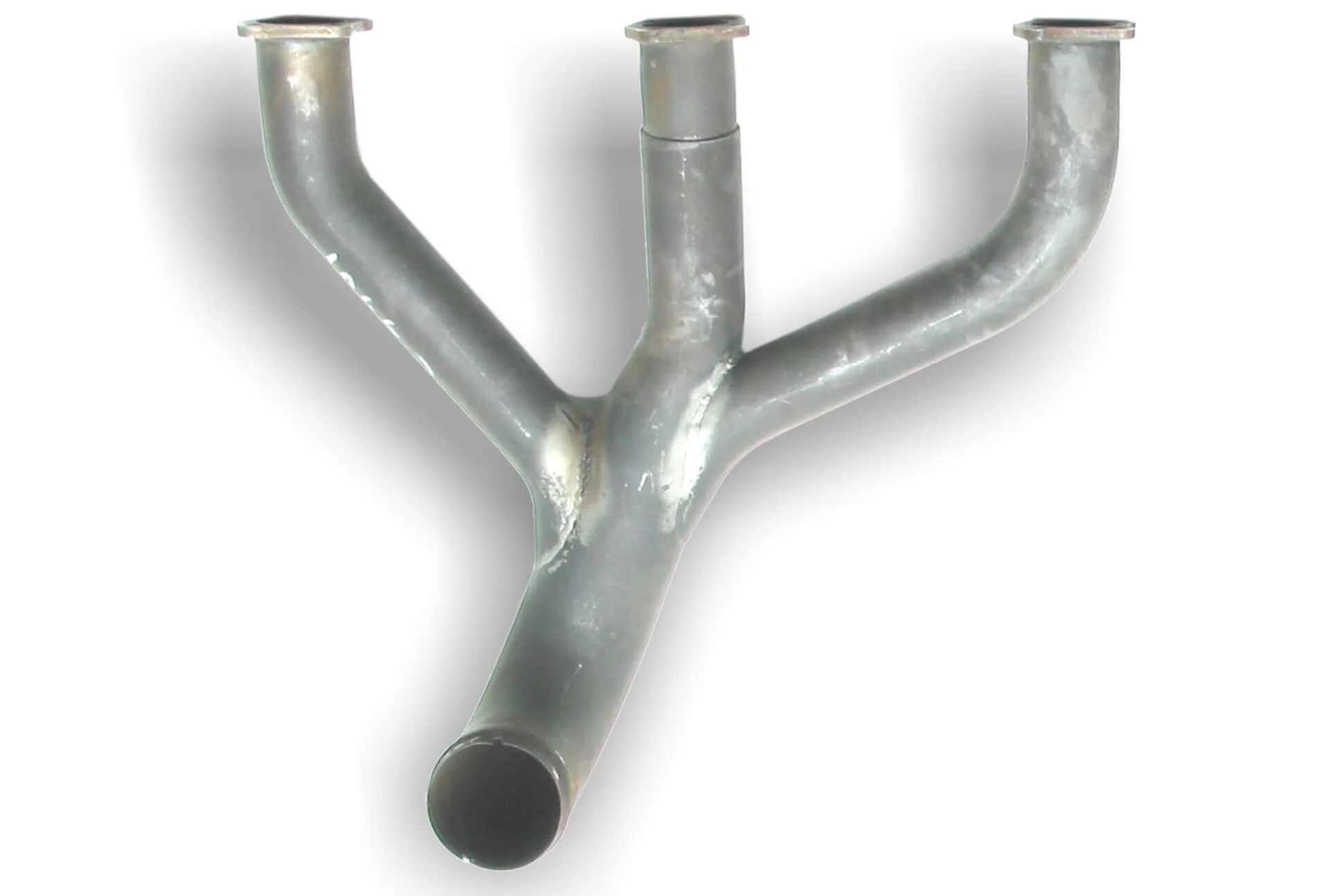
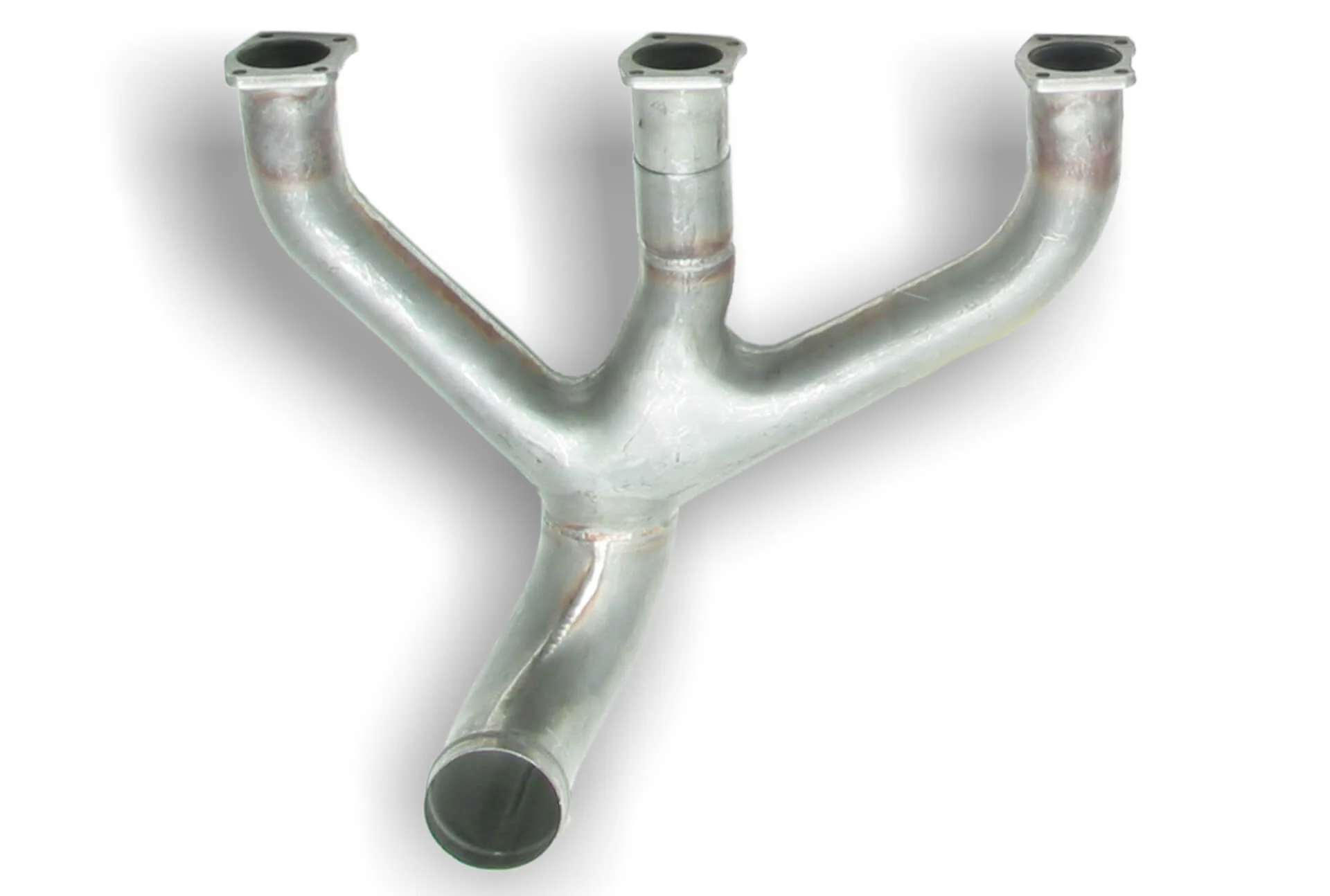
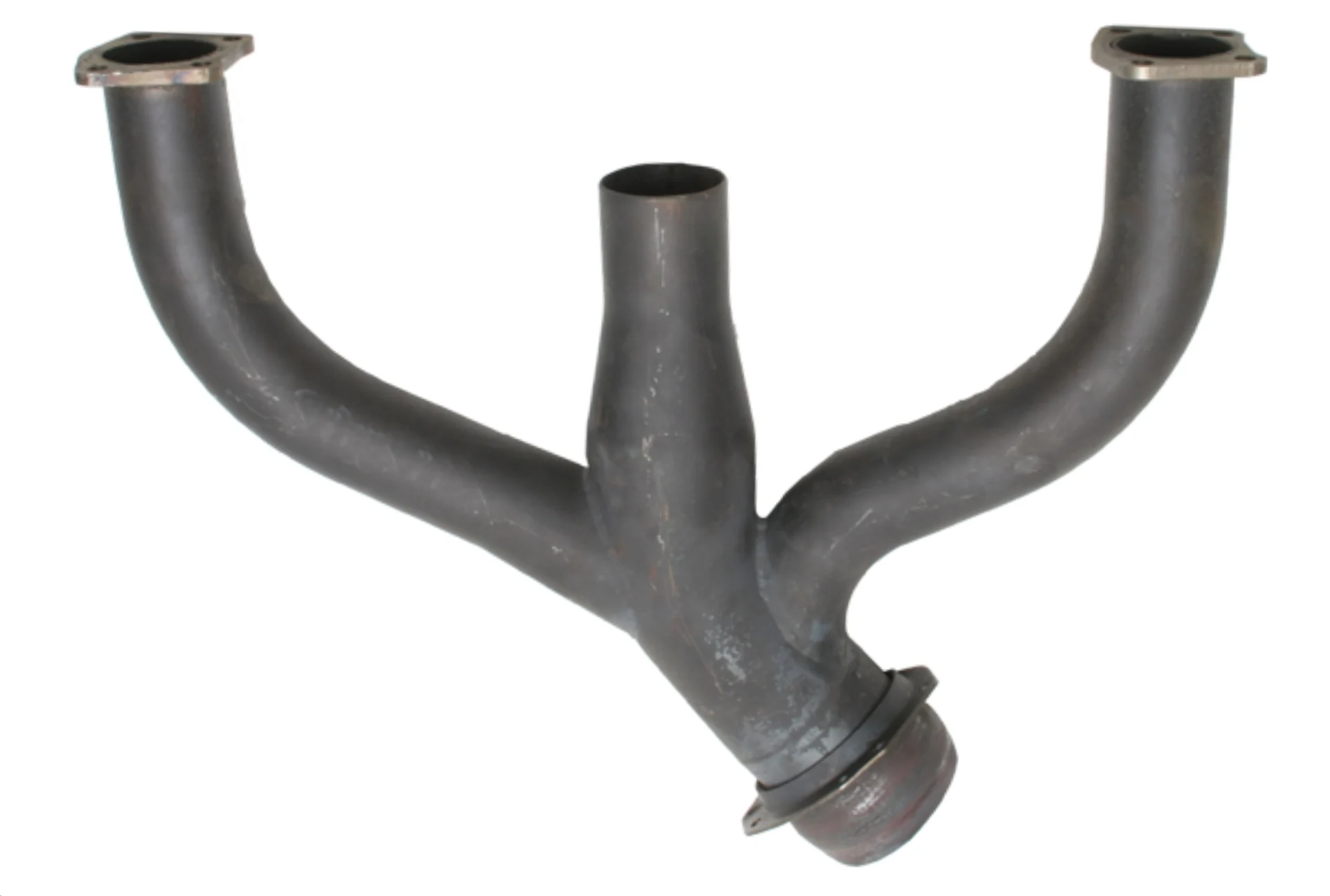
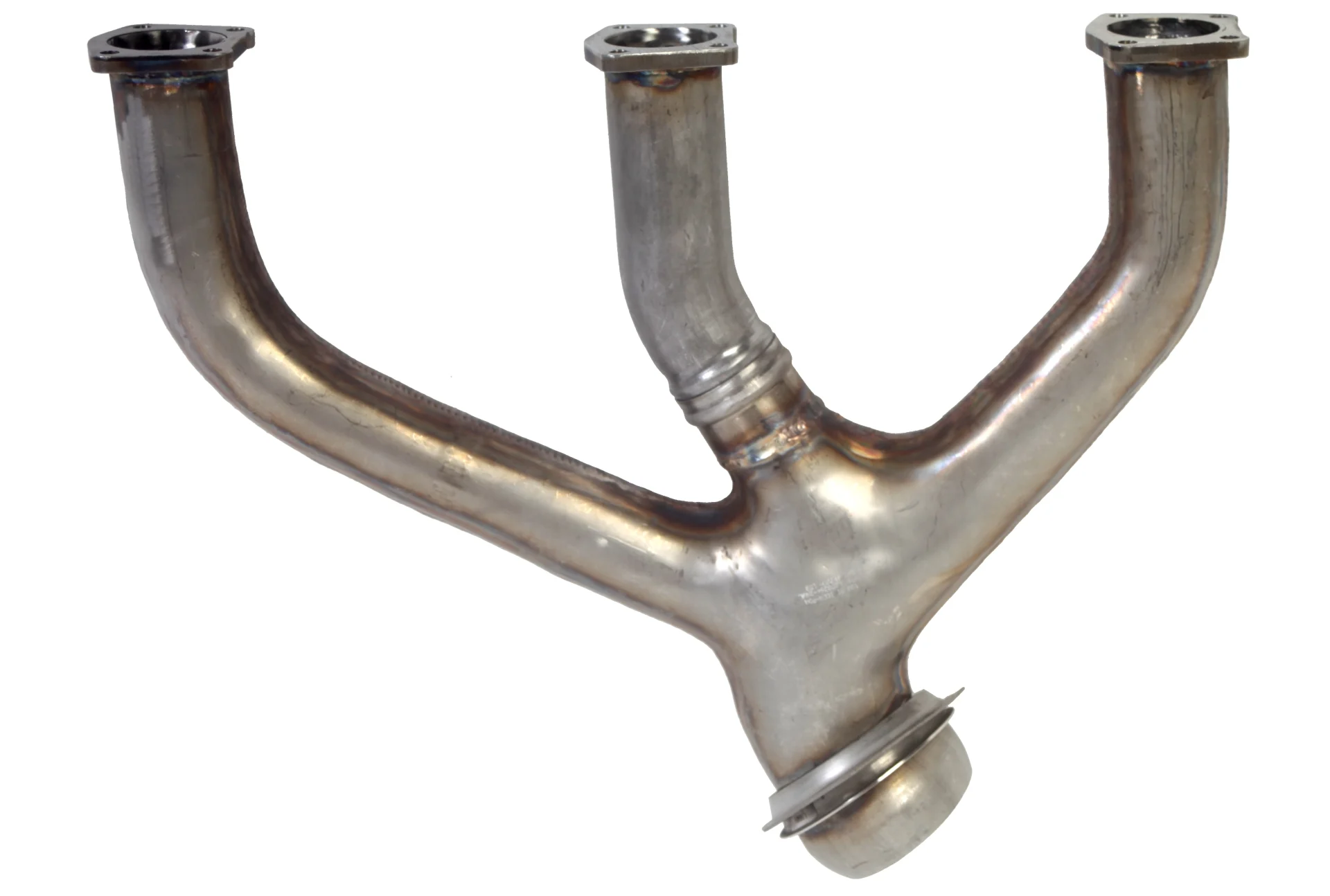
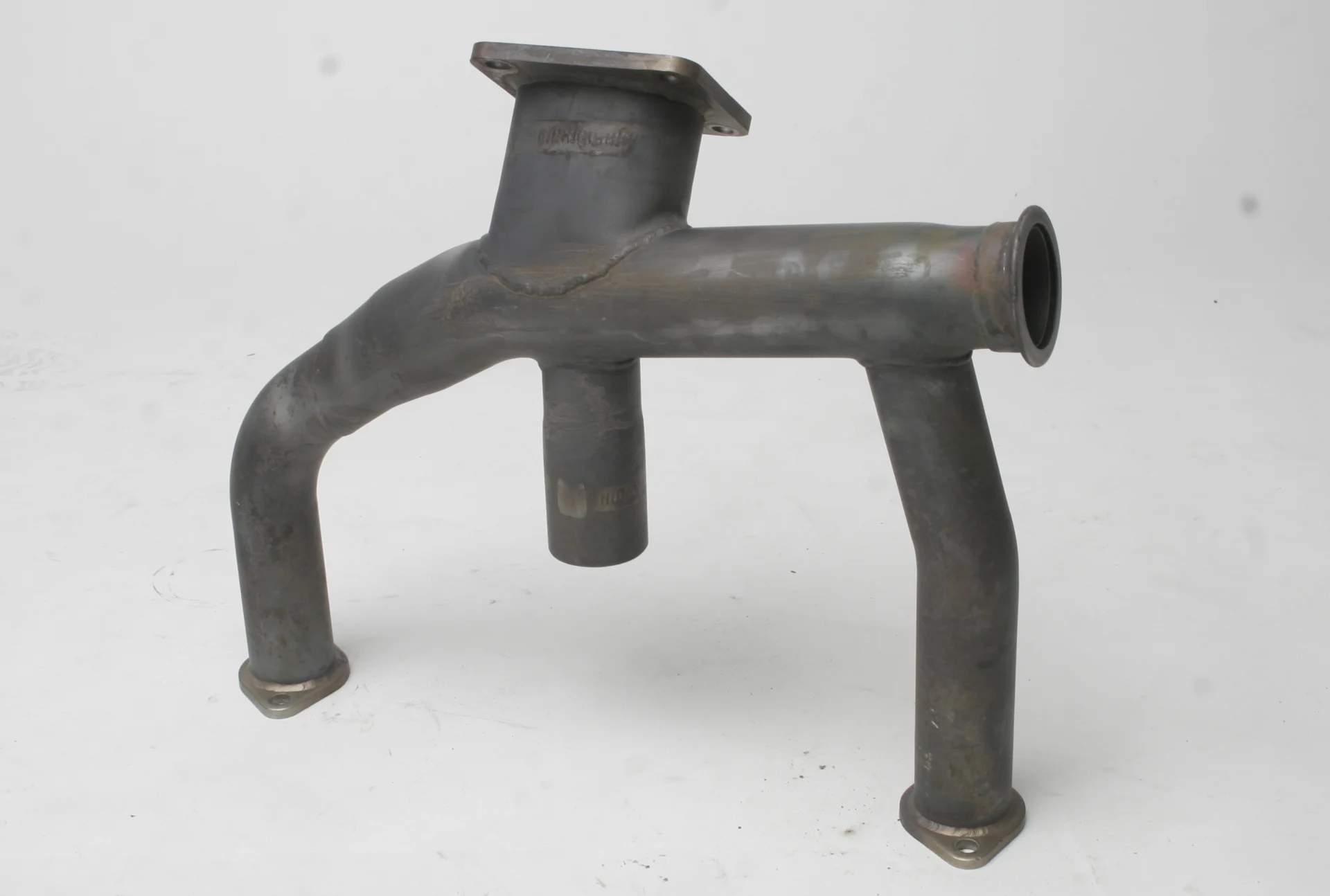
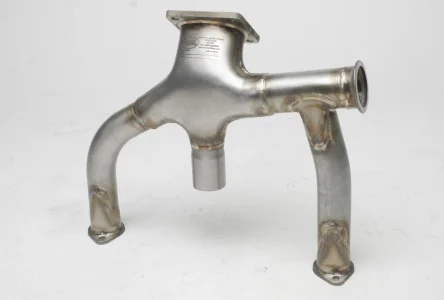
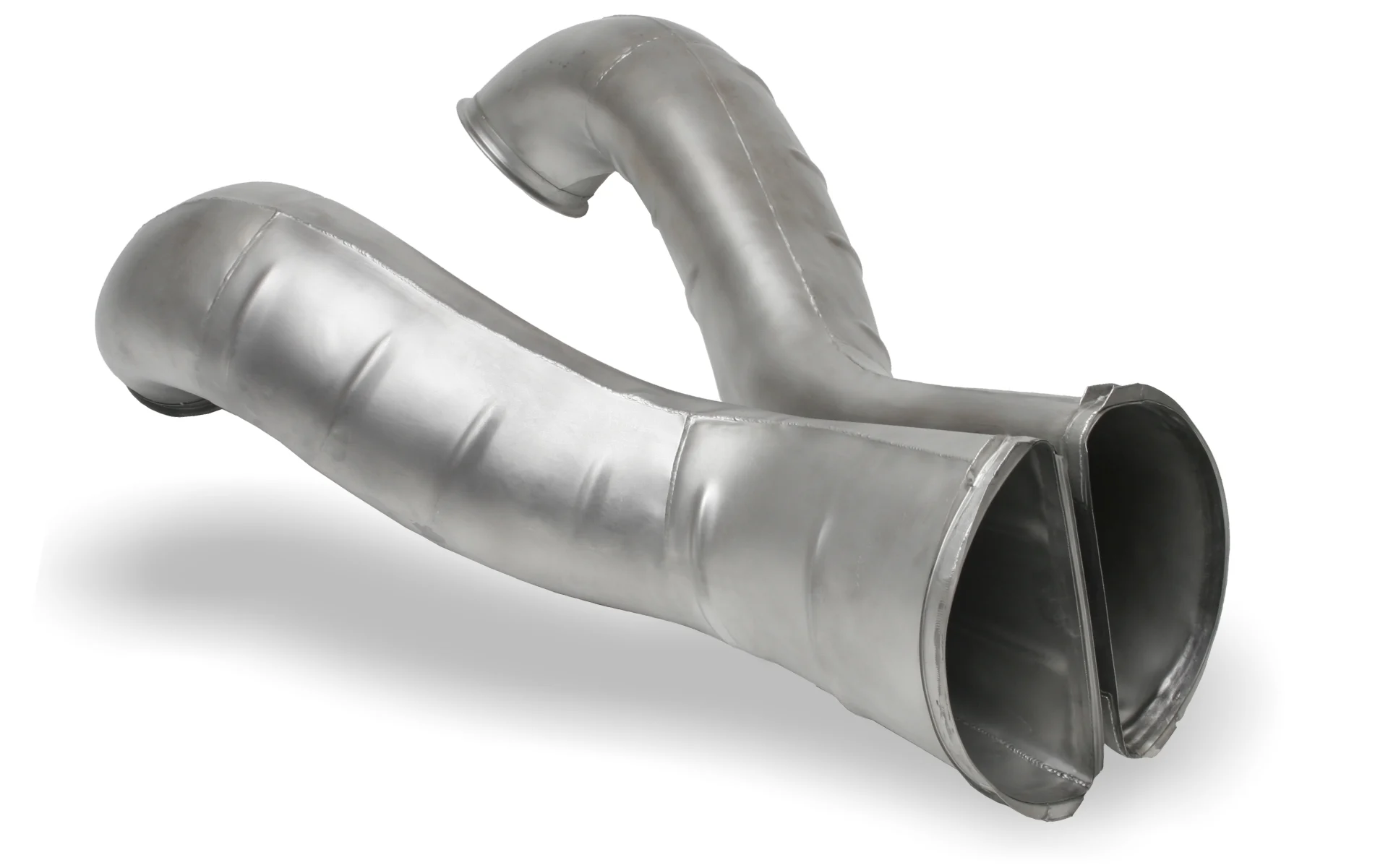
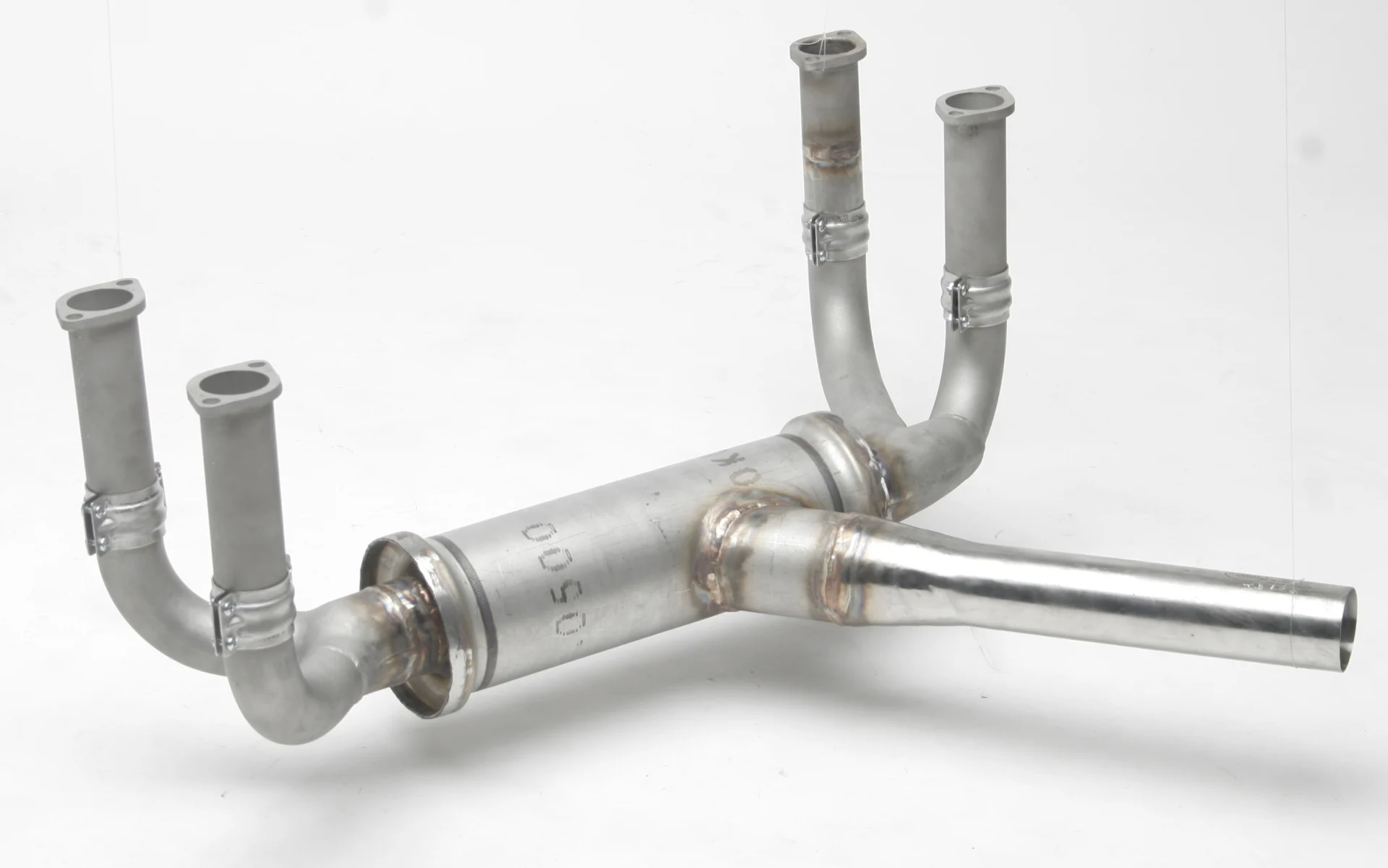
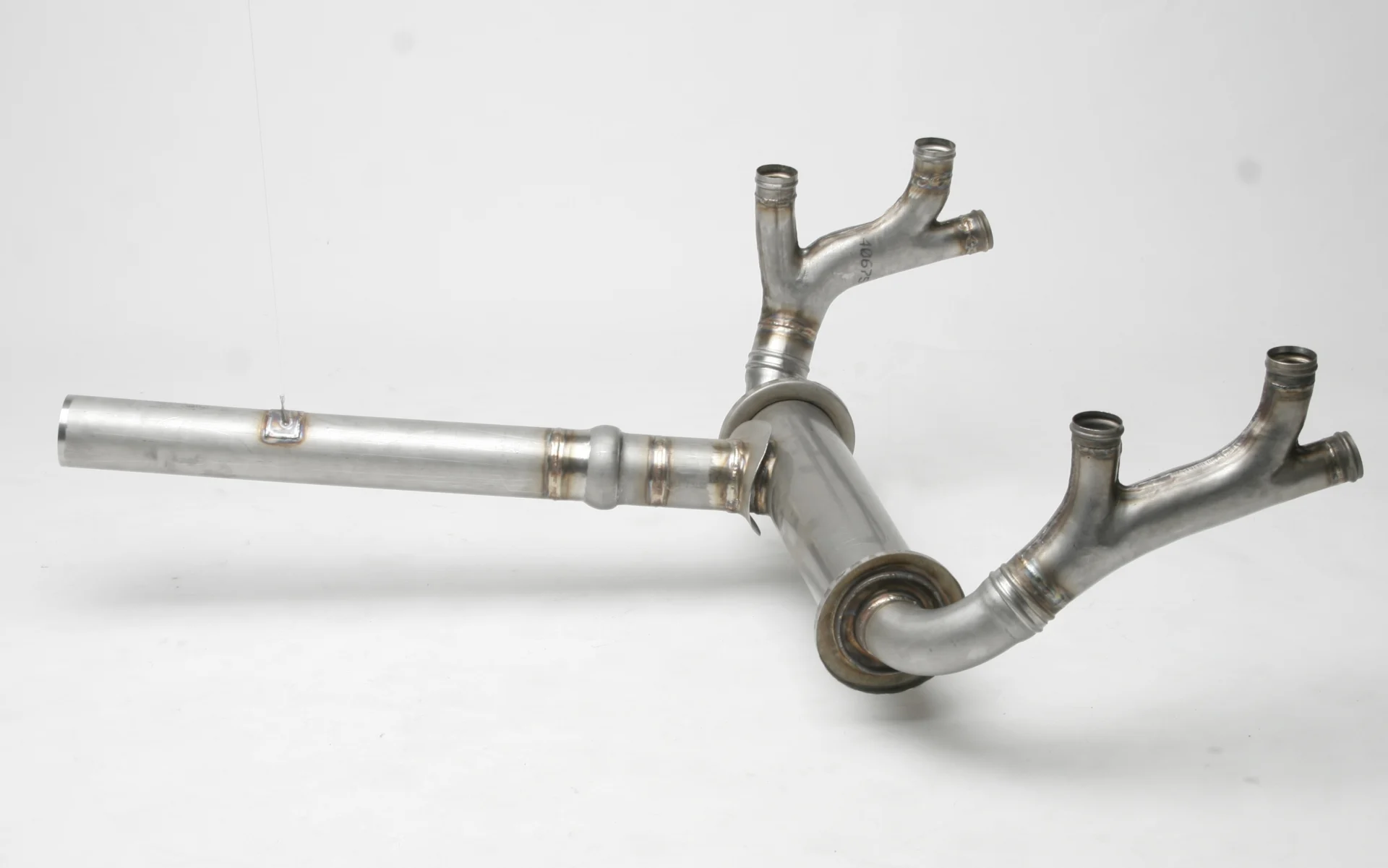
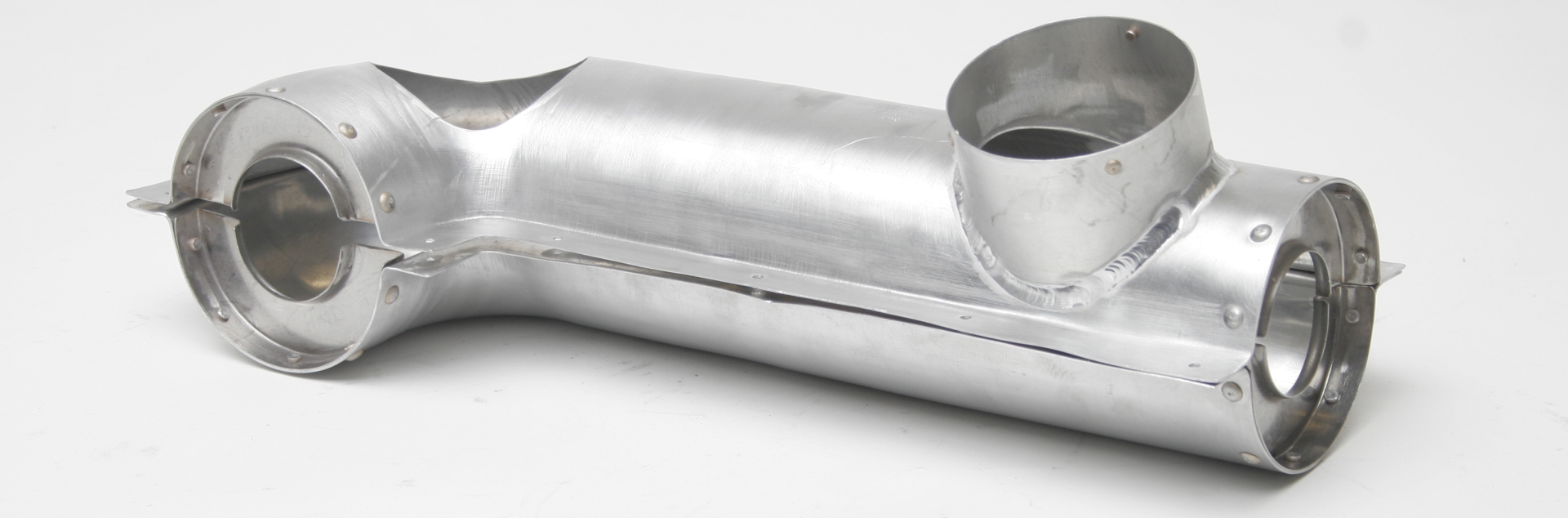
Federal Aviation Administration – Parts Manufacturer Approval (FAA-PMA) may serve the same function as OEM parts, but their quality doesn’t measure up. Poor design in some PMA parts can lead to a shorter service life. For example, the construction differences between the units shown below could result in a severe exhaust failure. OEM parts are made with two formed shells, and the aftermarket PMA parts use fillet-welded tubes. The originally formed tooling, though costly, ensures that the load is carried through the parent material rather than relying on welded joints.
The Pull-Through Method
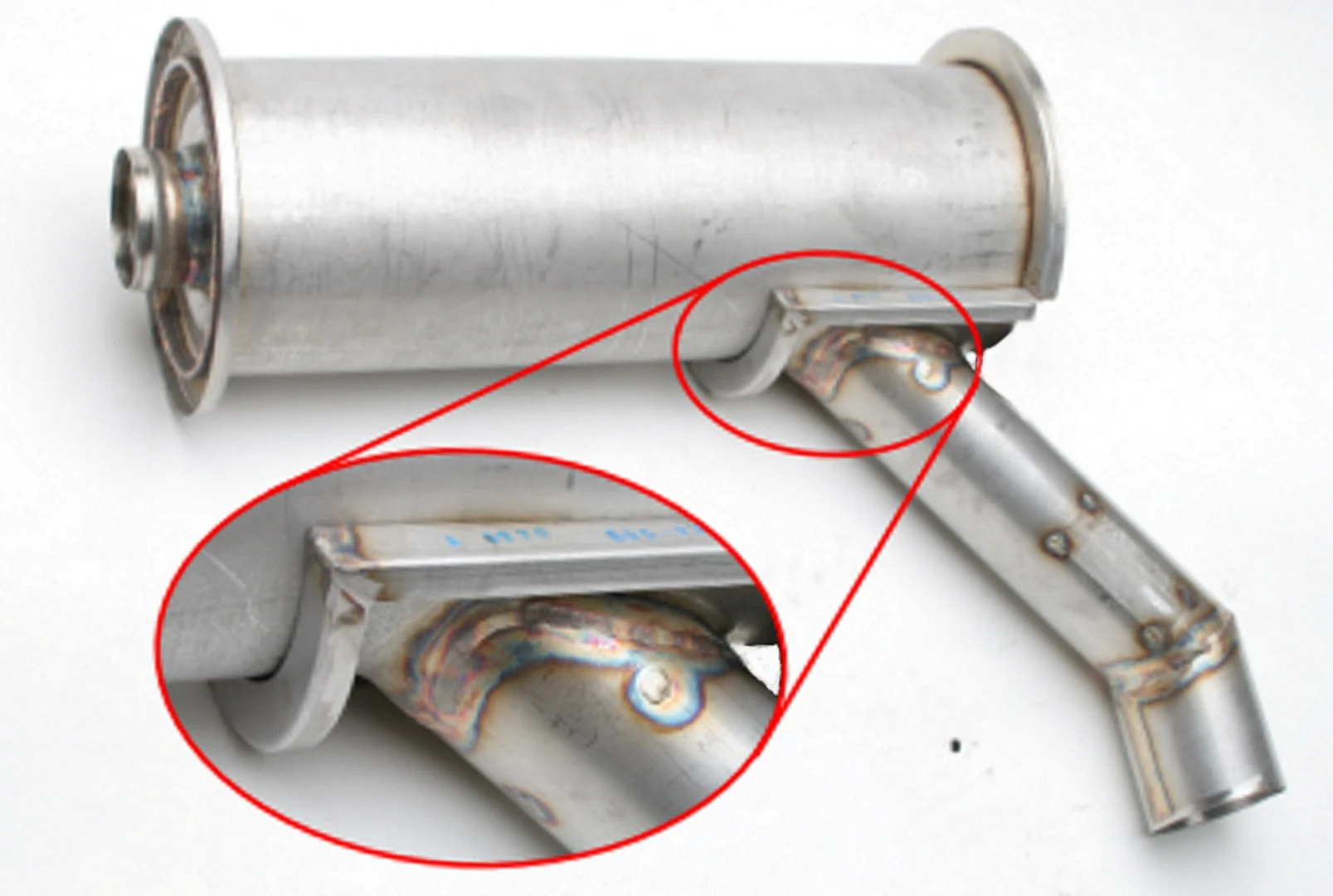
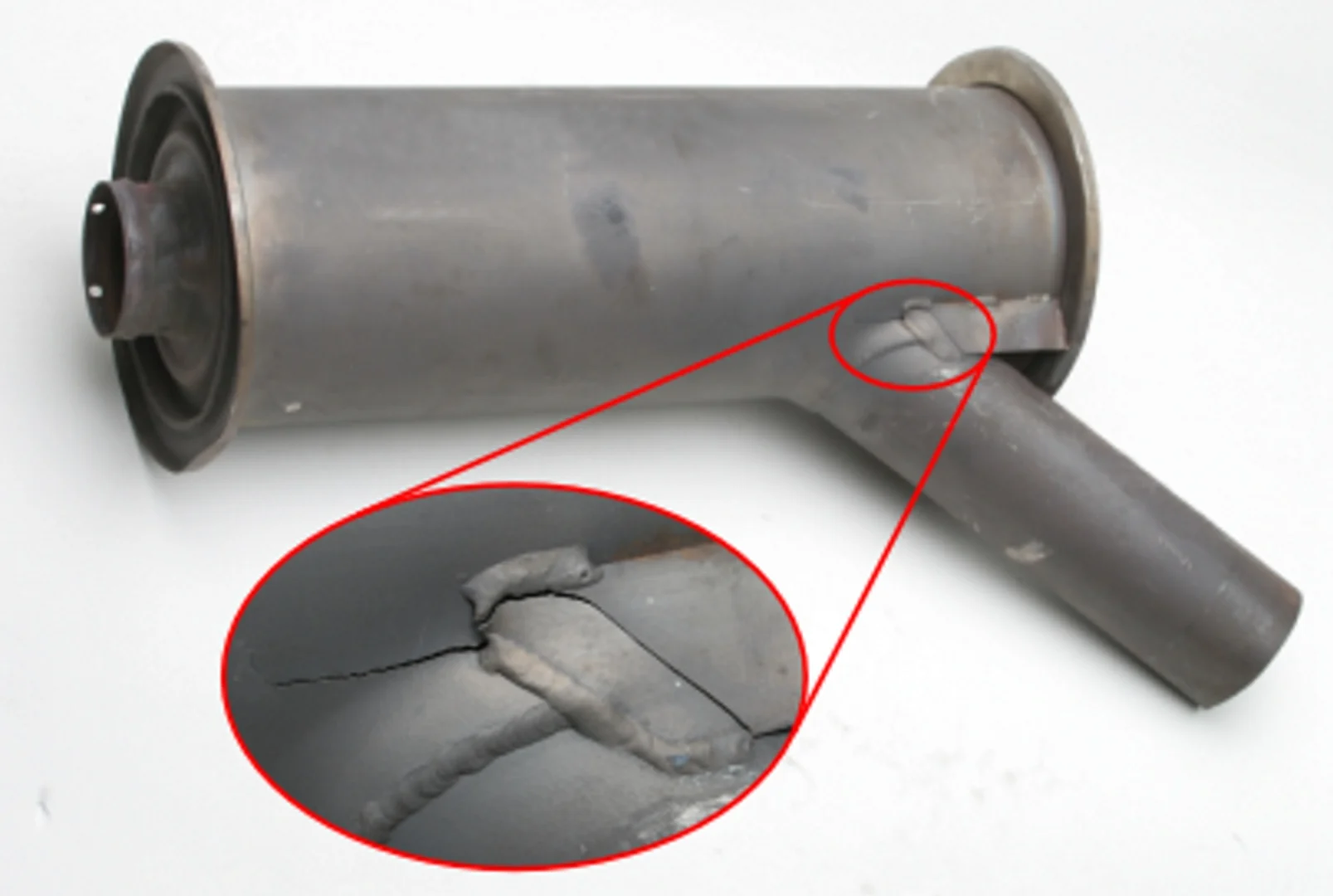
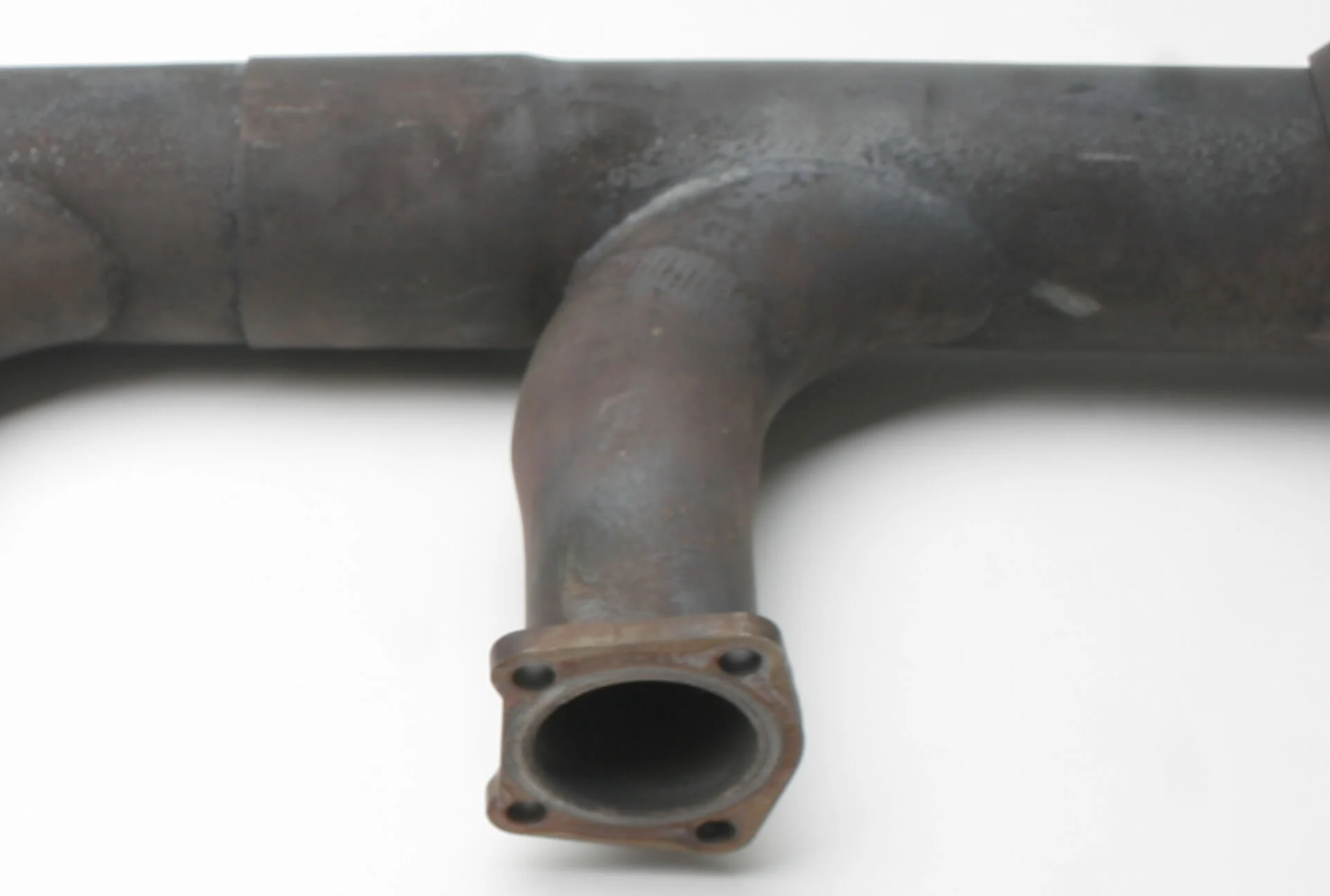
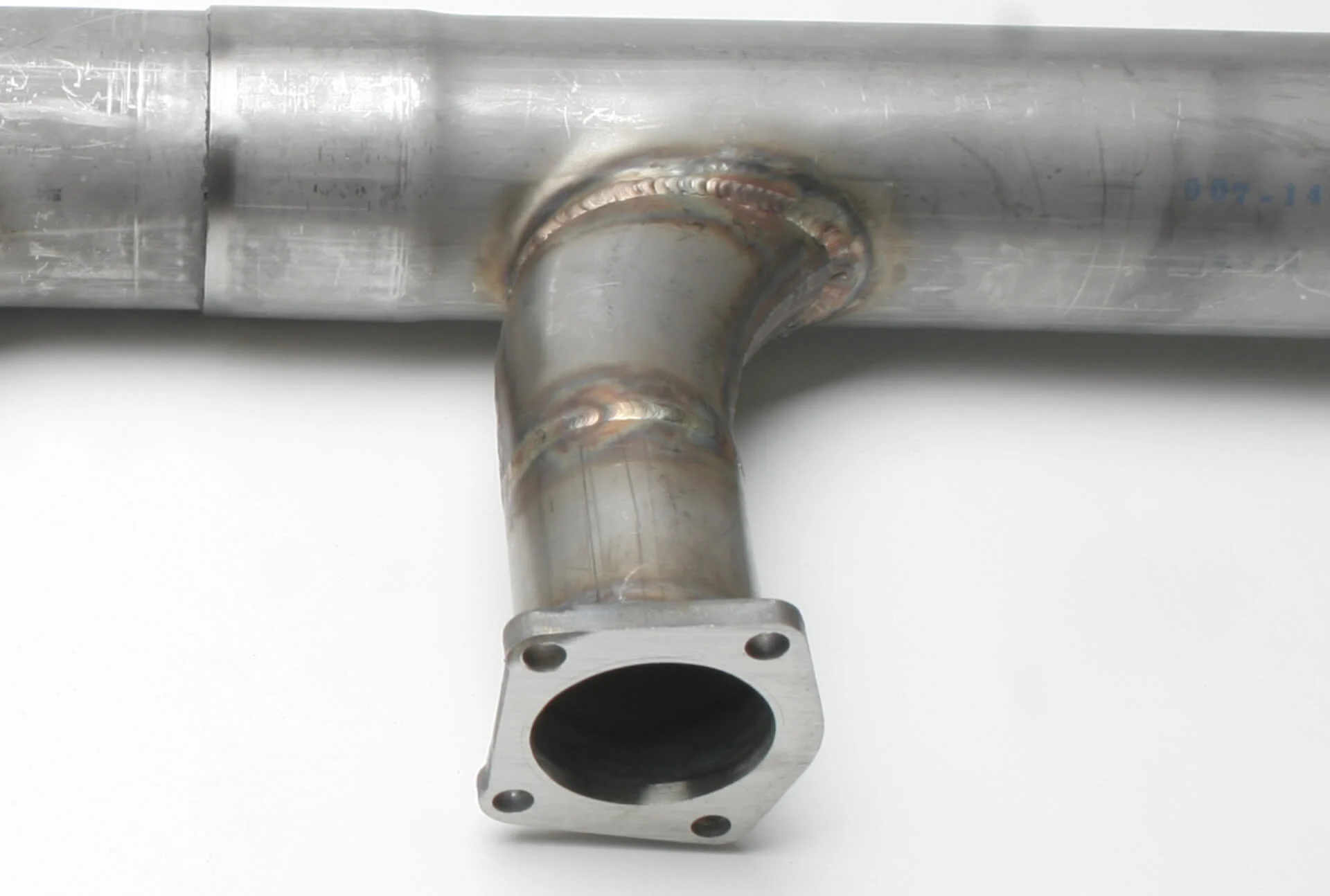
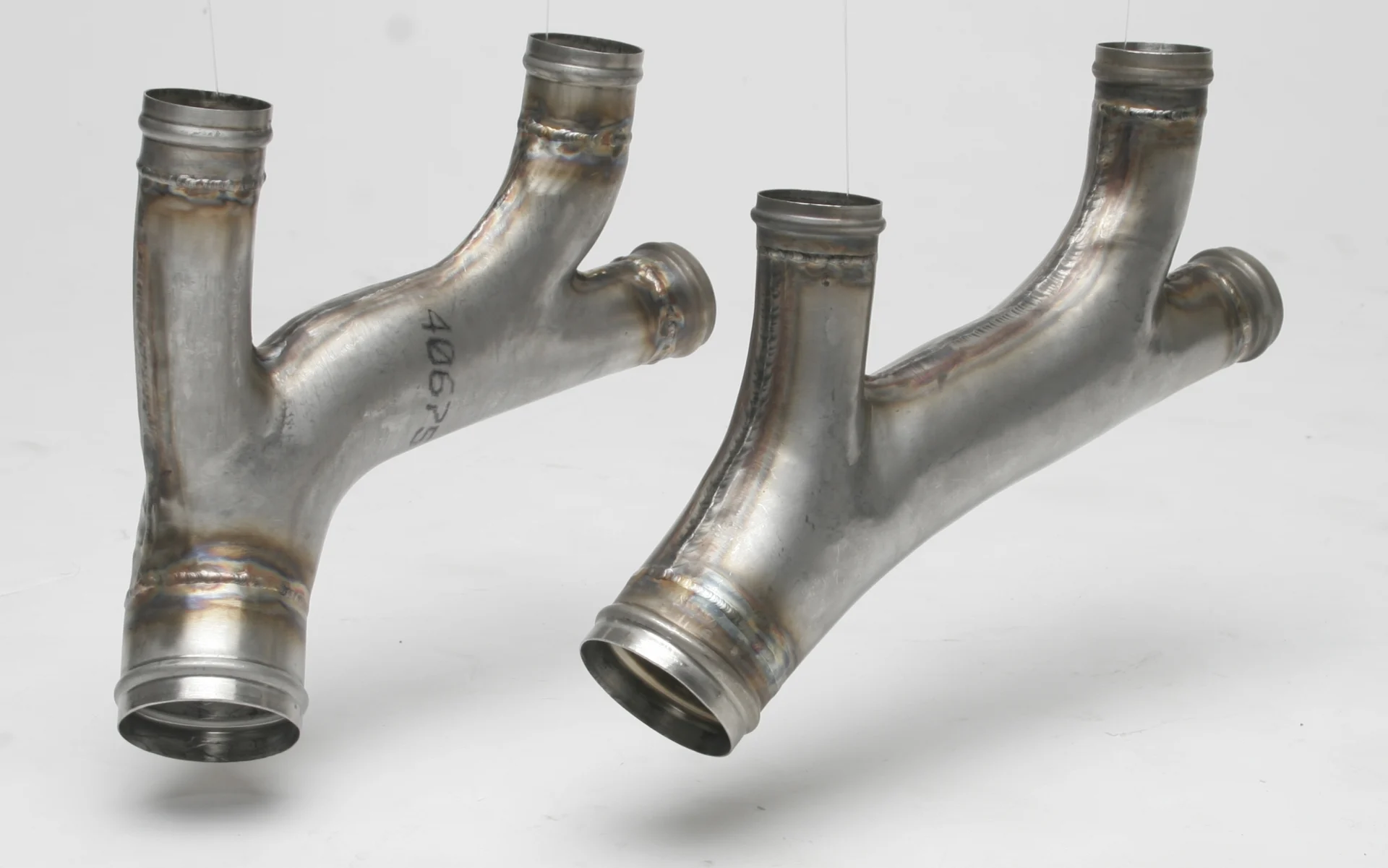
We also use a technique called the ‘Pull Through’ method for aircraft exhaust systems. This involves cutting a smaller hole rather than a standard-sized one. A lip is then extruded to elevate the weld away from the shoulder area, which is prone to cracking. This technique results in a much stronger joint between exhaust components.
Cessna 300-400 Pull through Airworthiness Directive (AD) 2000-01-16
The photo displays the difference between a part with (right) and without (left) a pull-through. The part on the left shows a crack adjacent to the weld.
We use rigid weld fixtures to guarantee a precise fit during installation. Where possible, wire bails are added to outlets to prevent blockages, offering an additional layer of reliability. Afterward, each unit undergoes a leak test and a final quality control inspection by certified welding technicians to meet the stringent Aeropace Welding Standard (AWS) D17.1. The inspection process is critical to avoid carbon monoxide poisoning, loss of power, or fire and requires thorough review. LearnHartzell Aviation’s best practices and how to inspect your aircraft exhaust system and parts.
New and Overhauled Aircraft Exhaust Parts
Our technicians, with an impressive 319 years of combined welding experience, are the backbone of our operations. The fact that two of our original employees from 1987 are still part of the team is a testament to our commitment to excellence. Whether your project is large or small, simple or complex, we offer expert solutions for all your aircraft exhaust needs, ensuring you can trust us with your aircraft.Hartzell Aviationholds a Class I, II unlimited FAA repair station certificate and European Aviation Safety Agency (EASA) approval. Learn more aboutHartzell Aviation’s overhaul services and process from start to finish.
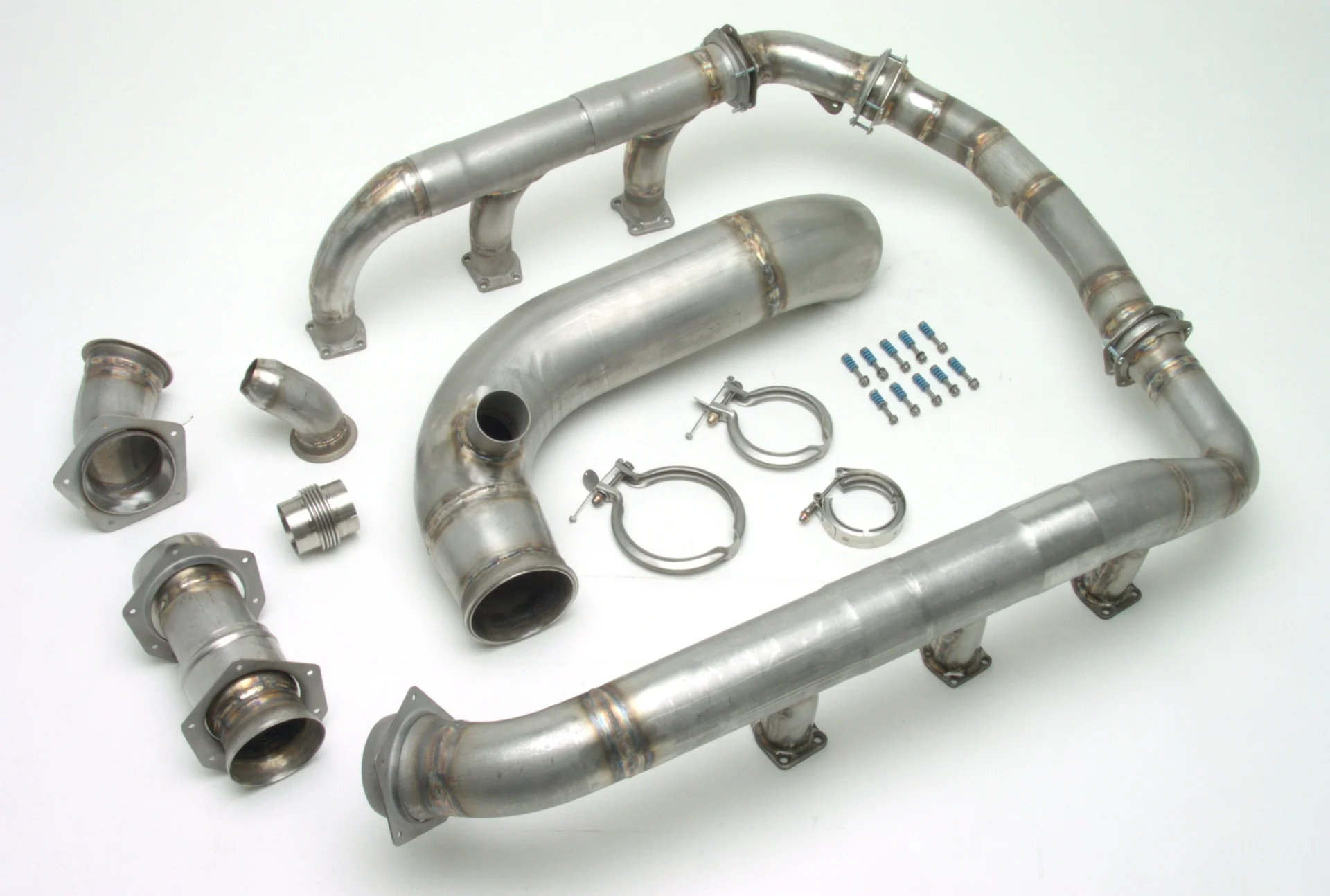
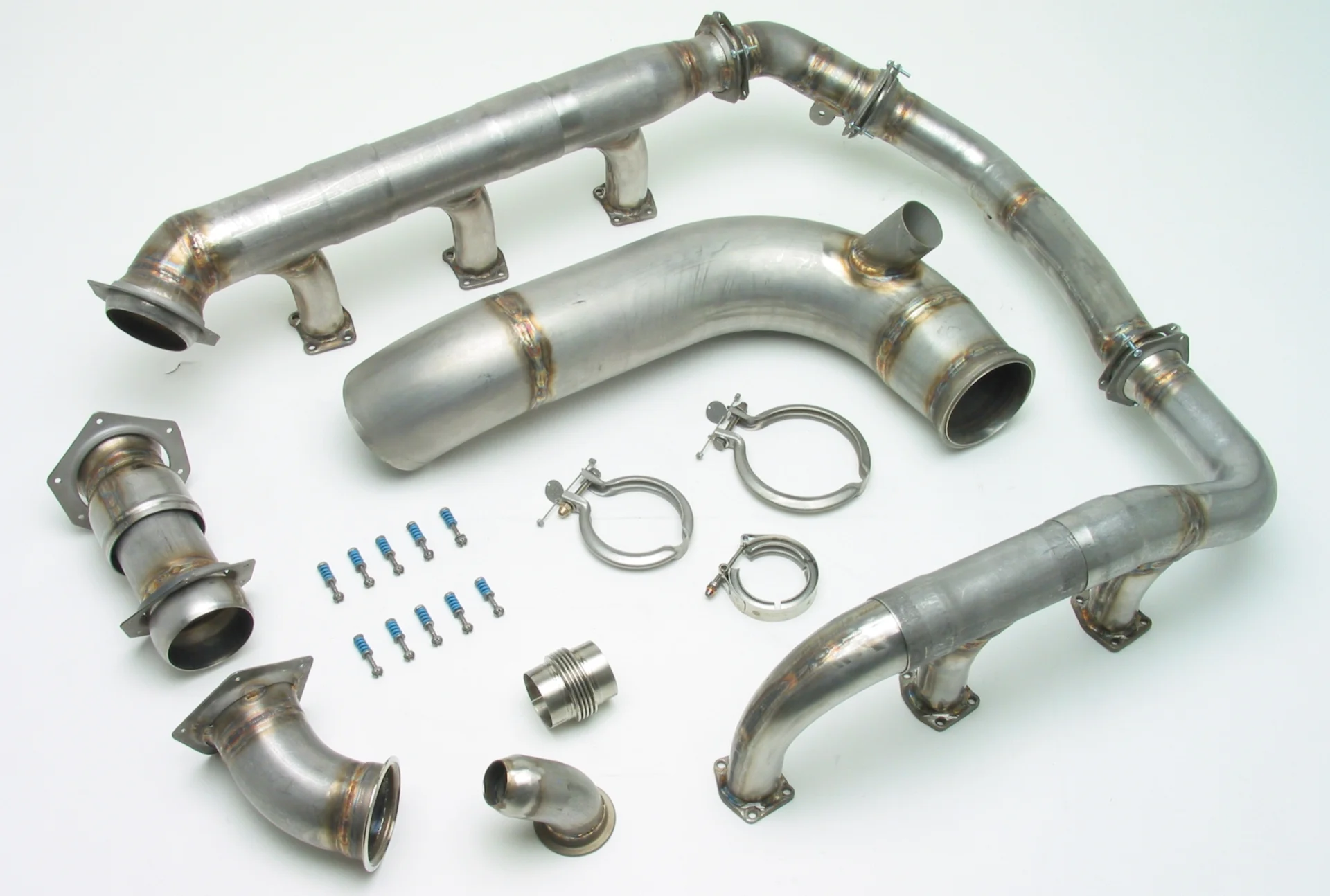
Special Services – Twin Cessna Exhaust Airworthiness Directive Compliance (AD 2000-01-16)
Hartzell Aviation is authorized to fulfill the overhaul requirements of “Paragraph G” under Title 14, Section 43 of the Code of Regulation. Paragraph G sets the standards and procedures necessary for the maintenance, repair, and overhaul of aircraft exhaust systems as outlined by regulatory authorities. These guidelines ensure that all work meets specific safety and quality criteria We recommend replacing all exhaust components during engine overhauls. AtHartzell Aviation, we restore exhaust components to like-new condition using OEM materials and processes. Our exhaust systems are designed to surpass the 2500-hour inspection interval between changes. However, due to the challenges of removing some configurations, we advise replacing them during engine changes for optimal removal.

Twin Cessna Exhaust AD 2000-01-16
Many components in these exhaust systems can be manufactured from stainless steel, Inconel, or a combination of both. According to the Cessna Maintenance Manual, exhaust systems made of stainless steel, partial steel, or those with unknown or repaired materials must undergo ultrasonic inspection every 500 hours of use time. This inspection is crucial for detecting any potential issues or wear and tear, especially for slip joints, turbo inlet wyes, and aft exhaust elbows. AD 2000-01-16 does not waive this ultrasonic inspection requirement or mandate using Inconel parts.
Special Services – Radial Exhaust and Vintage Restorations
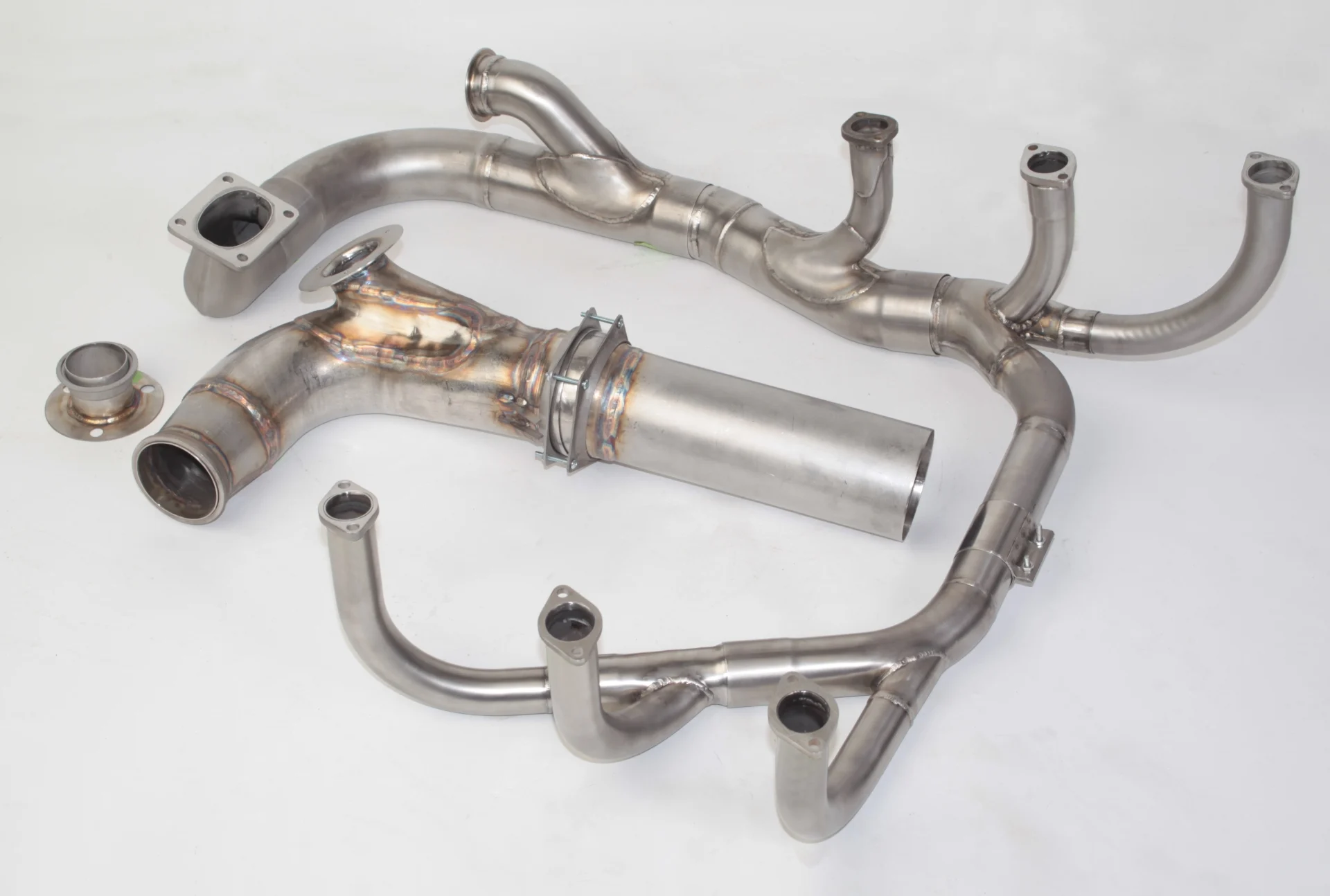
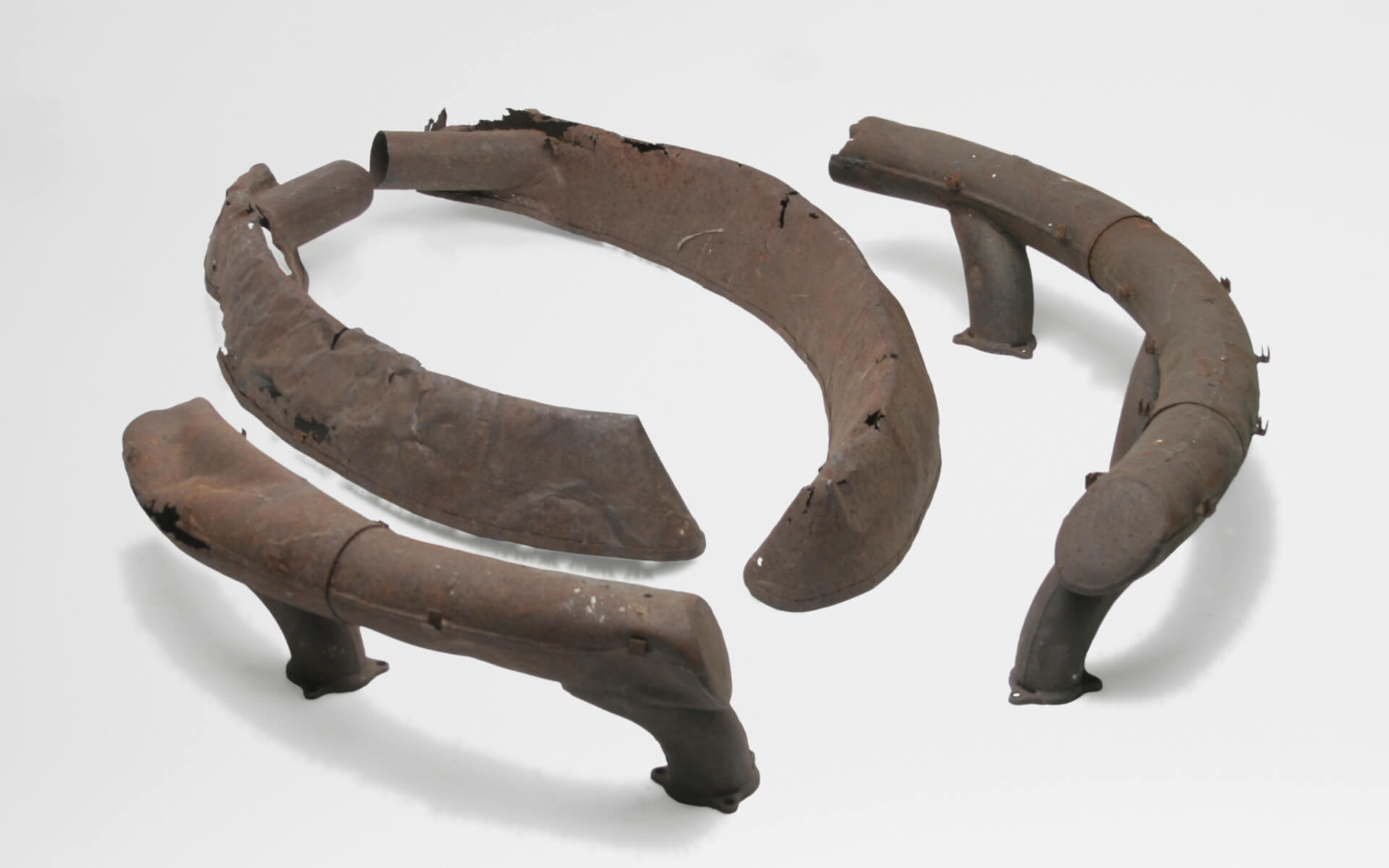
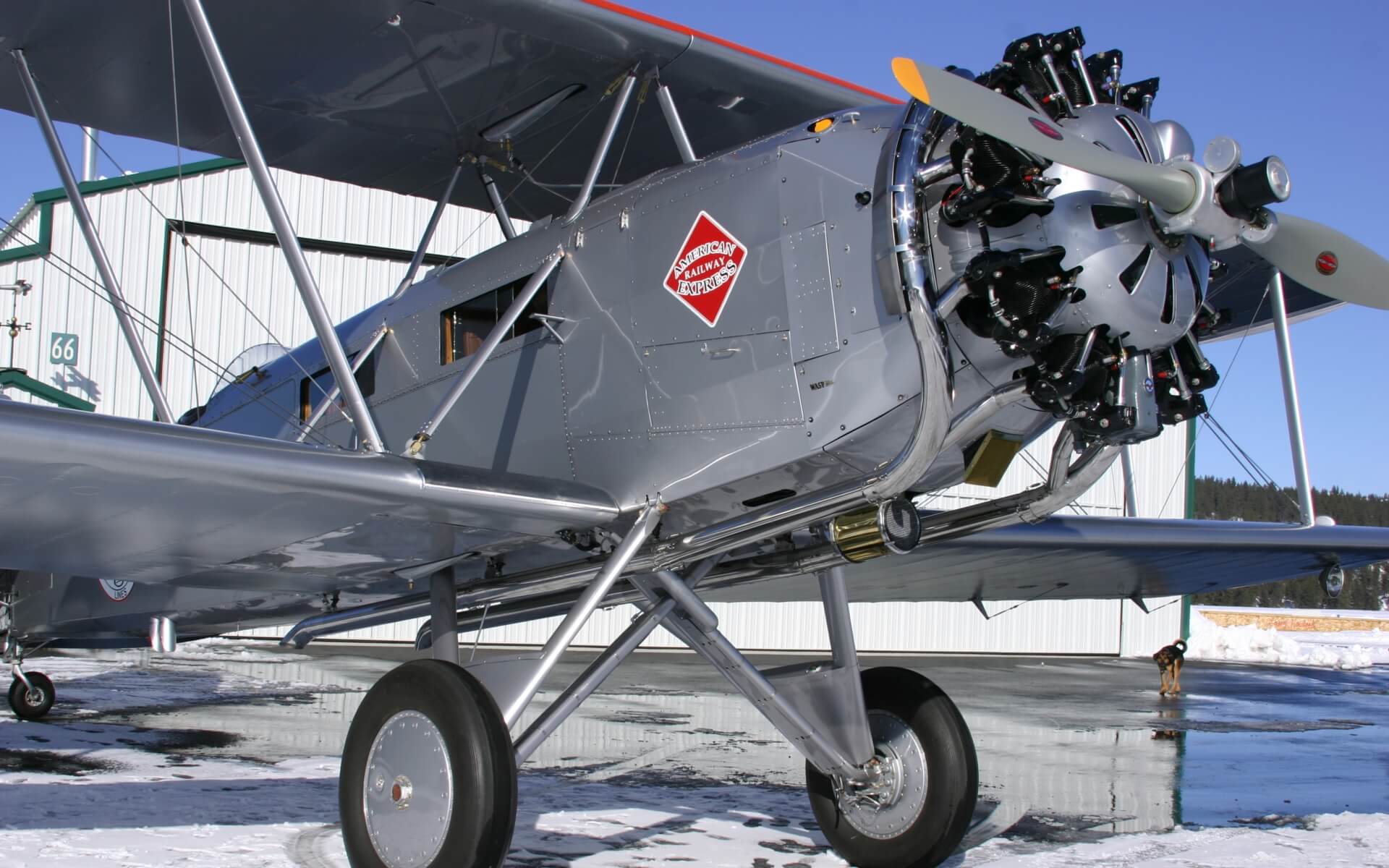
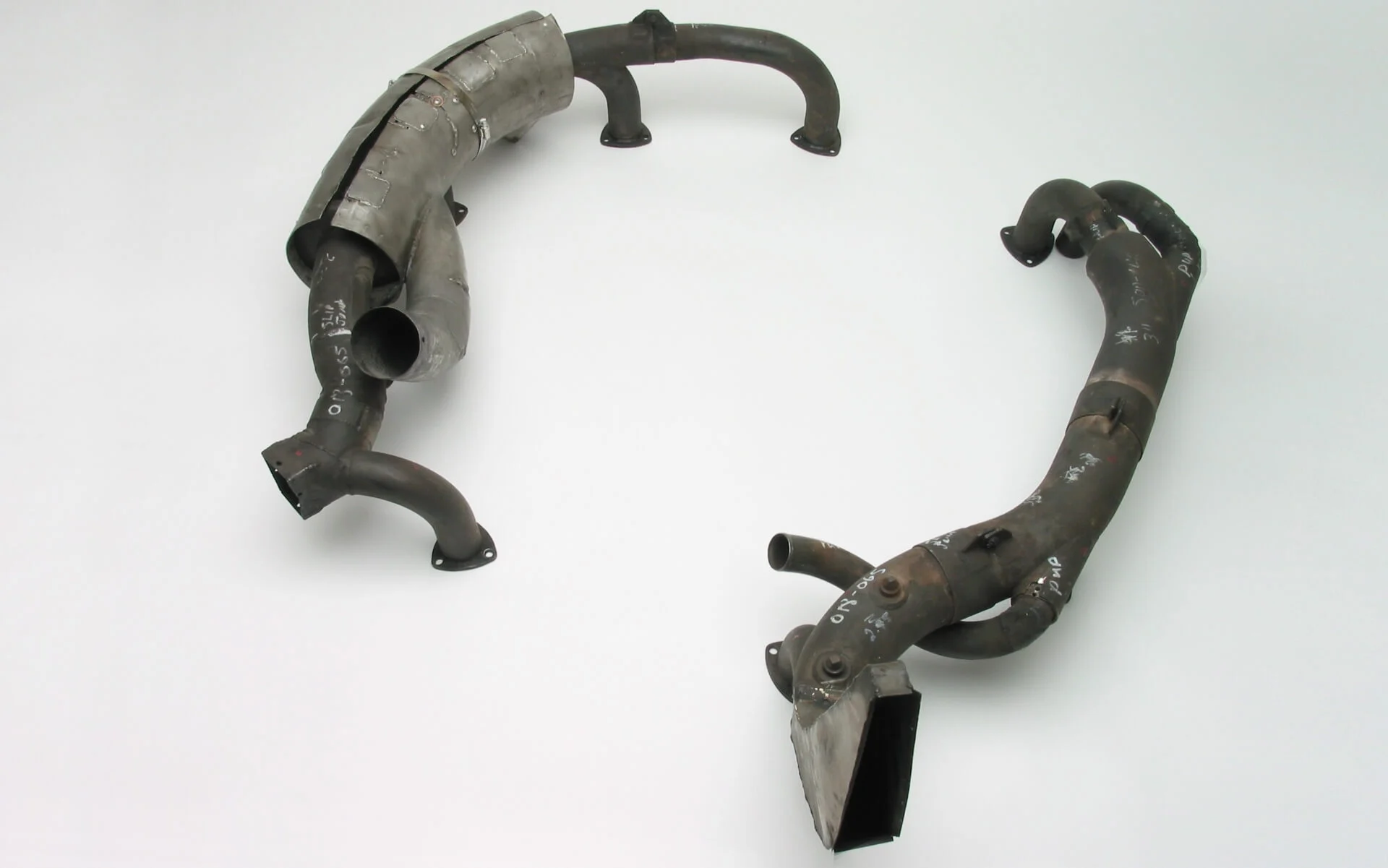
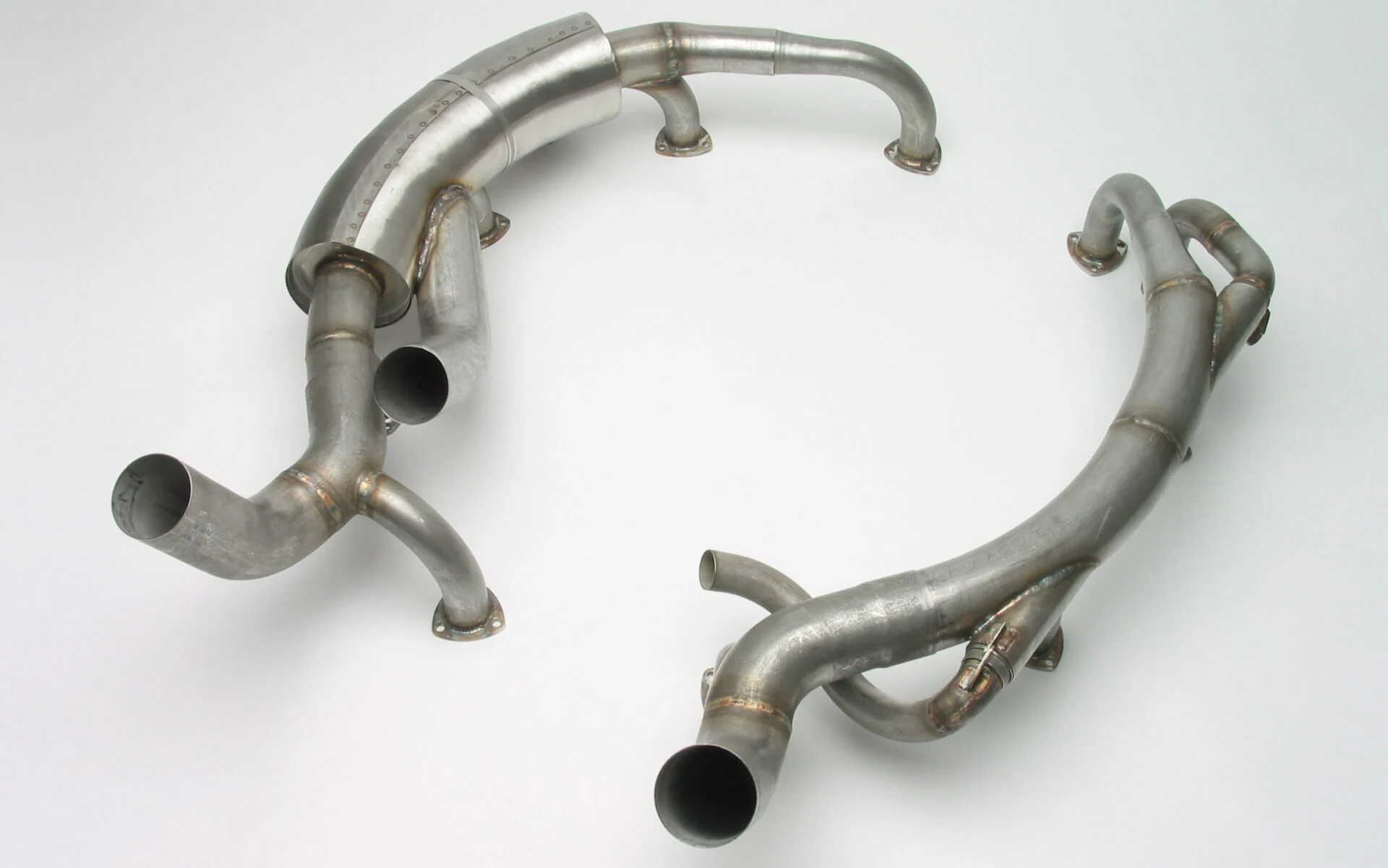
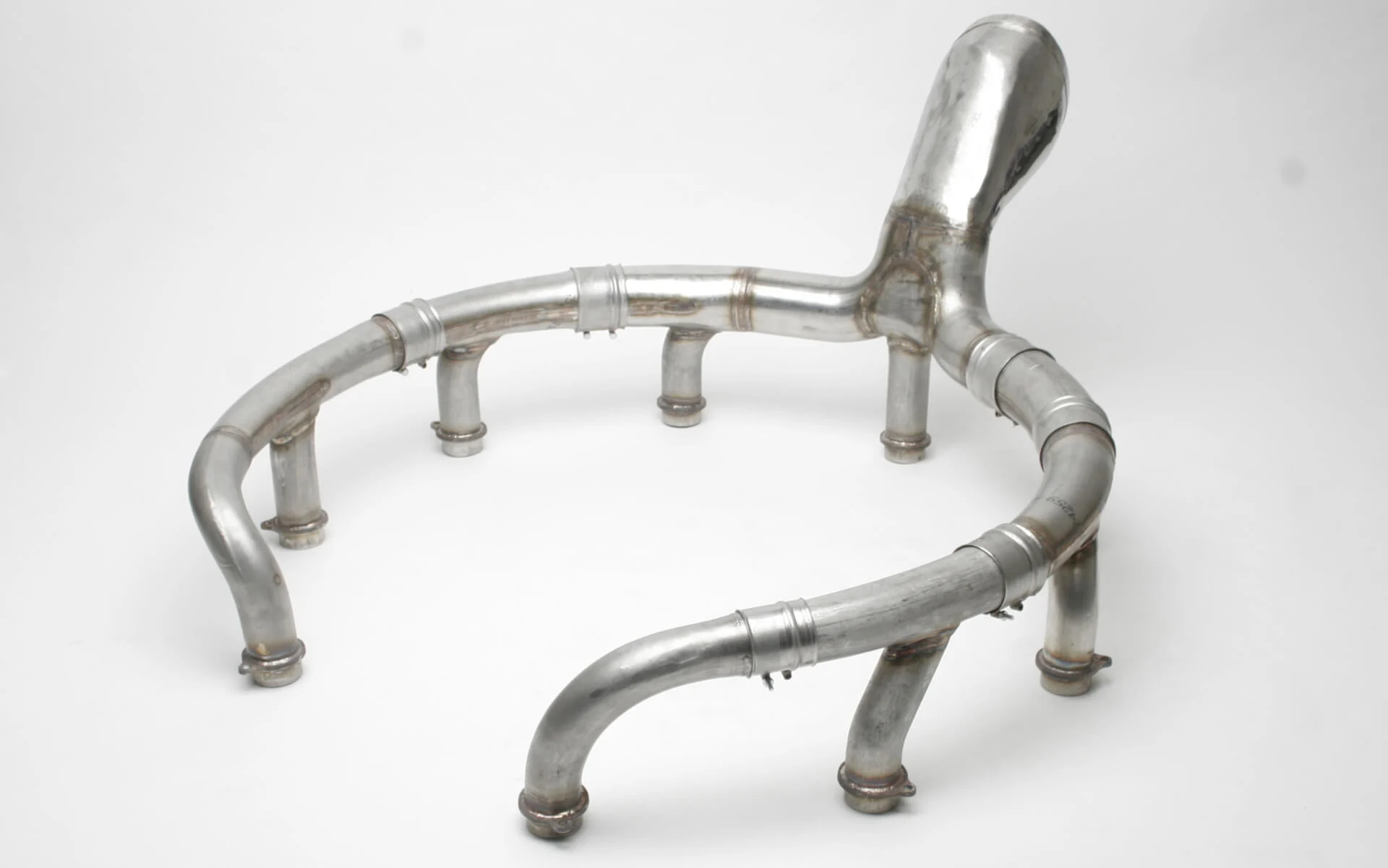
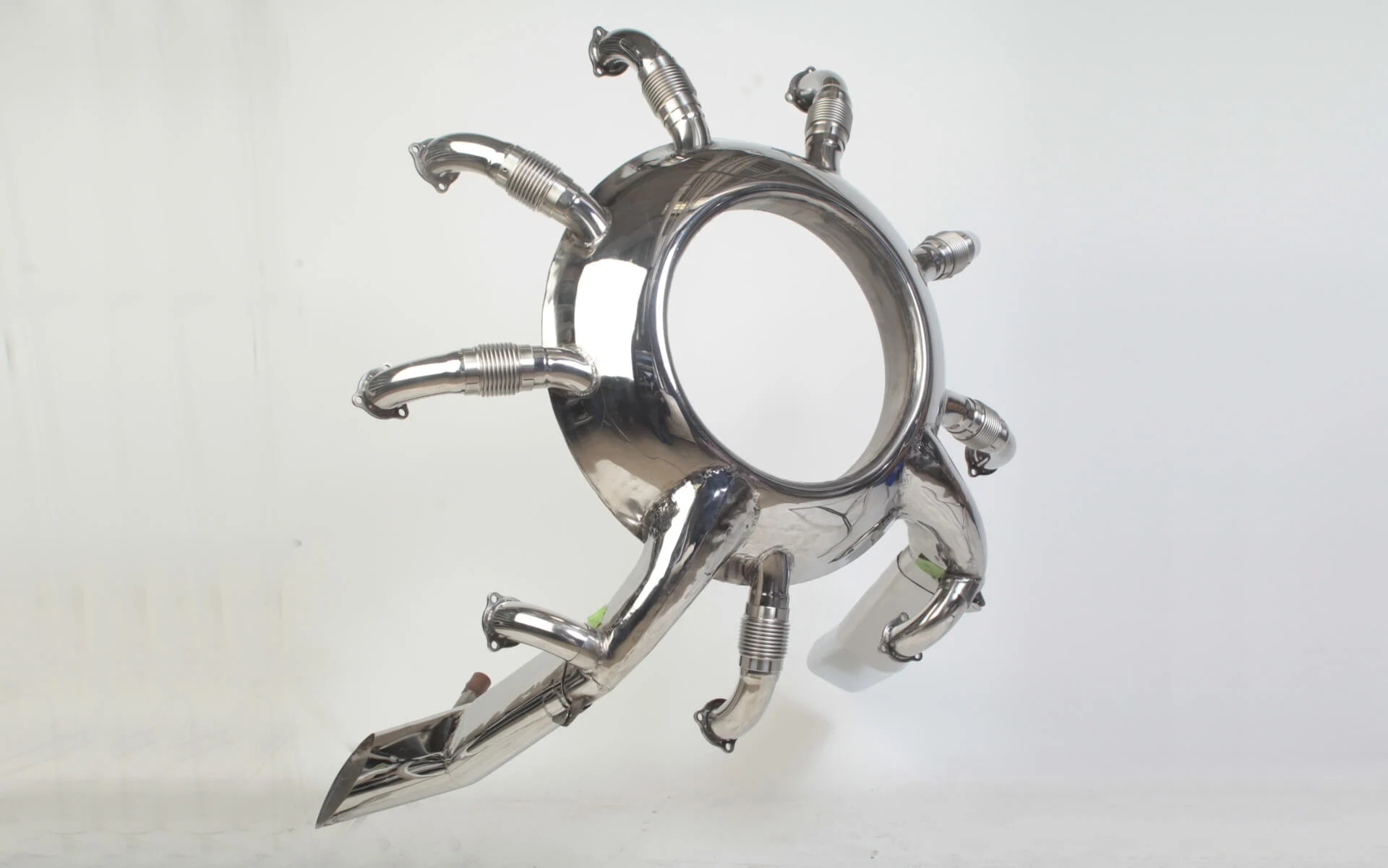
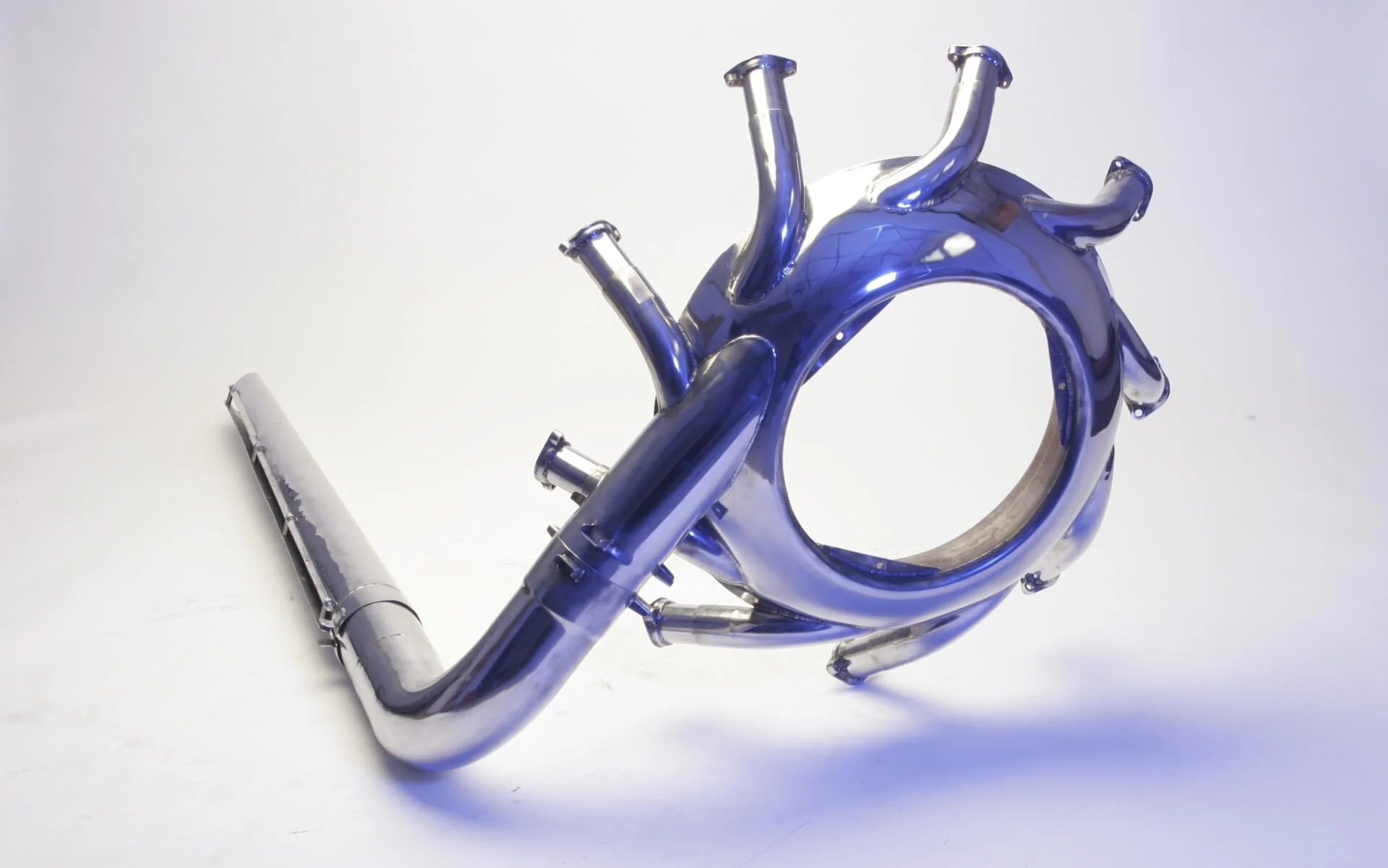
In addition to rebuilding and repairing older exhaust systems,Hartzell Aviationis the largest manufacturer of radial exhaust systems worldwide and produces new exhaust systems for out-of-production aircraft. Our radial exhausts are made for various aircraft, from the earliest Boeing still in flight to robust agricultural cropdusters and the latest aerial firefighting aircraft.



Aircraft Exhaust Systems FAQs
Below you will find a series of industry frequently asked questions surrounding aircraft exhaust systems. Read on to find out more information or contact us today with your aircraft exhaust system question or request.
- What is the role of the aircraft exhaust systems in general aviation models?
-
Aviation exhaust systems play a crucial role beyond expelling waste gases. They manage engine performance, reduce noise, assist in cabin heating, and optimize back pressure for efficient engine power.
- What are the different aircraft exhaust components?
-
A typical aircraft exhaust system consists of an:
- Aircraft exhaust manifold
- Aircraft exhaust stack
- Heat exchangers (mufflers)
- Any additional components like augmenter tubes and wastegates in turbocharged systems
- Why is regular maintenance crucial for aircraft exhaust systems?
-
Regular maintenance of an aircraft exhaust system ensures safety and performance. Inspections detect cracks, leaks, erosion, heat discoloration, excessive carbon build-up, and erosion or thinning of pipes. Early detection prevents catastrophic failures.
- How do SOPs contribute to the safety and longevity of exhaust systems?
-
Standard Operating Procedures (SOPs) provide instructions for proper aircraft exhaust system operation, troubleshooting, emergency protocols, and maintenance. Following SOPs ensures safe system functionality and ensure you get the most out of your investment.
- What Happens If You Don’t Inspect Your Aircraft Exhaust?
-
If you fail to inspect your aircraft exhaust system, it will lead to the complete failure of your aircraft’s engine and will hamper your airplane’s performance. Be sure to proactively inspect and service your aircraft exhaust system regularly!
Glossary of Terms
Below is a list of some common aircraft fuel system parts and terms.
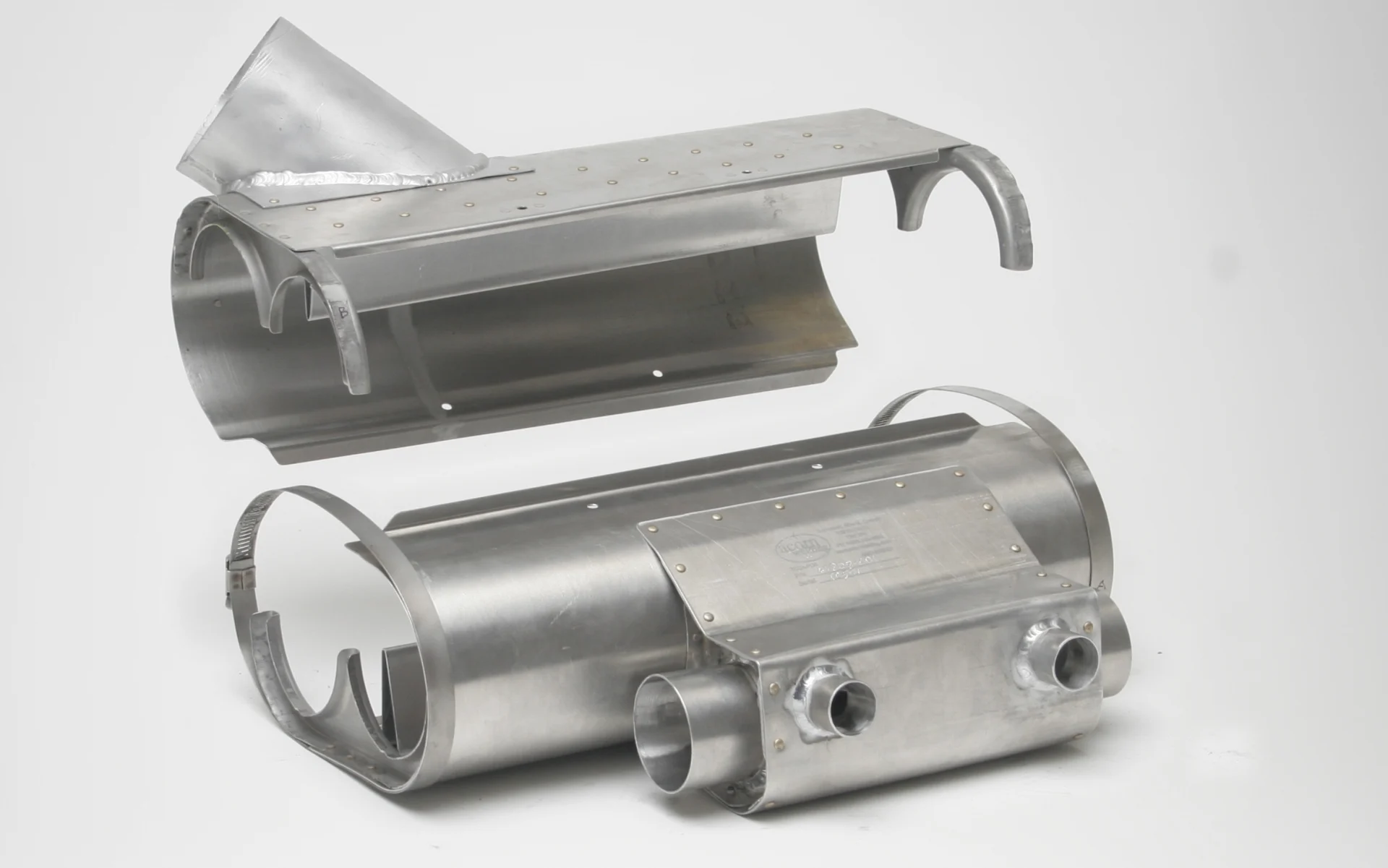
Exhaust Manifolds: These are the first part of the system that collects hot gases from each of the engine’s cylinders. They’re like pipes that gather all the exhaust in one place before sending it through the rest of the system.
Muffler: After the manifold, the exhaust gases flow into the muffler. This part reduces engine noise. Similar to a car muffler, the aircraft muffler helps keep things quieter both inside and outside the plane.
Tailpipe: The tailpipe is the final stop for exhaust gases. It’s the part you can often see at the back of the plane that guides the gases out of the aircraft and into the air.
Heat Exchangers: Some aircraft exhaust systems include heat exchangers, which use the hot exhaust to warm up the cabin air. It’s an efficient way to keep passengers comfortable without using additional energy.
Turbochargers: In some planes, the exhaust system includes a turbocharger. This part uses the energy from the exhaust gases to compress the air going into the engine, which helps the engine produce more power — especially at higher altitudes where the air is thinner.
OEM Parts: These are parts made by the original equipment manufacturer.
PMA (Parts Manufacturer Approval) Parts: These are parts made by other companies but still approved by the FAA.
Additional Resources
The links below provide further information about aircraft exhaust systems and the value of quality service.
How to Inspect Aircraft Exhaust System Parts
https://hartzellaviation.com/blog/how-to-inspect-aircraft-exhaust-system-parts
Your Aircraft Exhaust System: Tips for Inspection and Maintenance
https://hartzellaviation.com/blog/maintaining-your-aircraft-exhaust-system-tips-for-inspection
Factors and Strategies To Maximize Your Aircraft Resale Value
https://hartzellaviation.com/blog/factors-and-strategies-to-maximize-your-aircraft-resale-value
Contact Us
For reliable and expertly crafted aircraft solutions, trust our team to deliver the quality your aircraft deserves, including compliant welding and restoration services. If you have any questions or need assistance, please contact us today. We’re here to help with all your aircraft needs, providing you with the peace of mind that your aircraft will receive quality treatment.